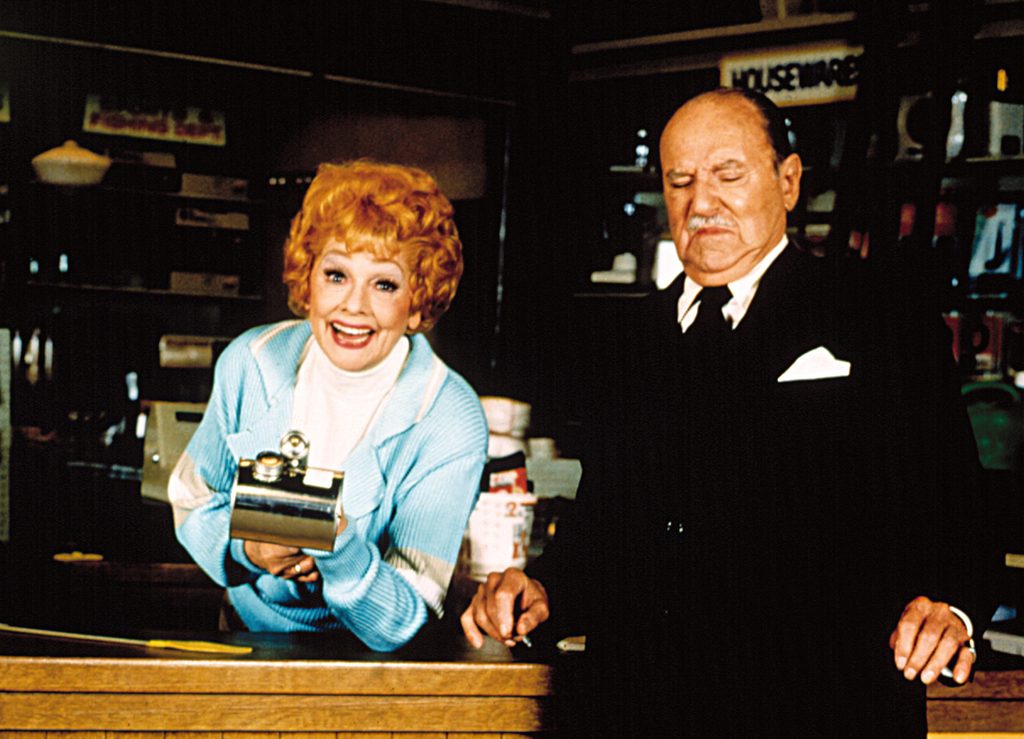
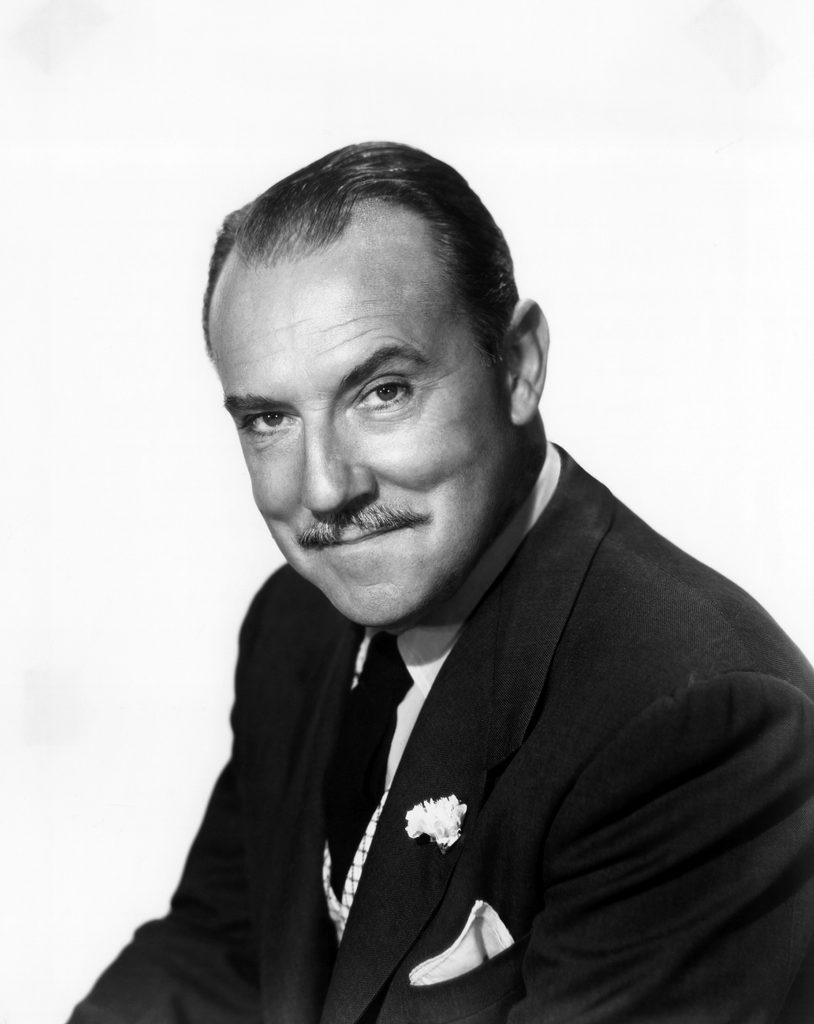
Gale Gordon: Lucille Ball’s 2nd Favorite Co-Star and the Man Behind TV’s Most Famous Temper
By Ed Gross
Posted on
The extraordinary life of the actor who made America laugh by losing his temper, told through his own words, contemporary newspaper accounts and an exclusive interview with television historian Geoffrey Mark, who is also the author of The Lucy Book.
If there’s one thing generations of television viewers remember about Gale Gordon, it’s his temper. As Principal Osgood Conklin on Our Miss Brooks, Theodore J. Mooney on The Lucy Show and Harrison Otis Carter on Here’s Lucy, Gordon elevated indignation into an art form. His eyes widened, his voice rose, his frustration mounted and eventually came the explosion audiences had been waiting for. Yet the man behind those characters was very different: a private, thoughtful individual who preferred painting, woodworking and the quiet of the California desert to the excitement of Hollywood.
Gordon’s career stretched from the theater of the 1920s through radio’s golden age and into the television era, where his professional association with Lucille Ball would endure for nearly half a century. Along the way, he discussed his life and work with newspaper reporters whose interviews have preservced his voice for future generations. Those accounts, together with the observations of television historian Geoffrey Mark, reveal a remarkable story about an actor who overcame childhood speech difficulties to become one of American entertainment’s most distinctive comic performers.
Finding His Voice
Gale Gordon was born Charles Thomas Aldrich Jr. in New York City on February 20, 1906. His father, Charles T. Aldrich, was a vaudeville performer, while his mother, Gloria Gordon, was an actress. The family spent considerable time in England, and the young Gordon grew up surrounded by the theatrical profession. But his own future as a performer was complicated by a condition that affected his ability to speak.
GALE GORDON: “Until I was three years old, I couldn’t speak a word—all I made was frightening animal noises. Meanwhile, I became very speech conscious and learned to project a pleasant sound with diaphragmatic pressure. I suppose I turned to acting because it was the ultimate challenge.”(Herald and Review, February 17, 1964)
GEOFFREY MARK: “What do you get when you take a child brought into the show business born with a cleft palate who has to be taught to speak very slowly and clearly while operations are going on to fix that? Who is good-looking? Who has this wonderful voice? Who has this large career on radio and kismet happens? He works with Lucille Ball in the late 1930s on radio. Gale had the surgery to fix his cleft palate when he was about 15 months old. His parents pushed him into acting in vaudeville to help him battle the speech impediment. And the therapy both with doctors and from working on the stage gave him that distinct way he spoke. Also, they lived in London, they lived in New York, they lived in Ohio, they went back and forth. And by 1915, they were in New York. His parents divorced and by 1923, Charles Jr. changed his name to Gale Gordon. His father was a quick-change artist and his mother was English and an actress. The Gordon thing was his mother’s stage name, Gloria Gordon, because his real name is Charles Aldrich Jr.”
The Early Theatrical Years
Gordon was pursuing acting professionally by the 1920s, appearing in touring productions and stock companies while building a reputation as a versatile young performer. Among his early opportunities was work with the celebrated stage actor Richard Bennett, including an appearance in The Dancers. Contemporary newspapers followed Gordon’s progress through theatrical engagements in California and elsewhere.
THE LOS ANGELES EVENING CITIZEN NEWS (December 13, 1933): “For a young man, Gale Gordon, who has the leading male role in Love Chinese, the new George James Hopkins play which opens at the Belasco Theater Christmas night, has had a very remarkable career. To enumerate all of the plays, motion pictures and radio activities of young Gordon would require columns of space.”
The early newspaper coverage provides a picture of Gordon long before his familiar television persona existed. He was a young actor moving between productions, learning his craft and attempting to establish himself in an increasingly competitive profession. His mother remained an important presence in his life, and their relationship was explored in substantial San Francisco newspaper profiles published during 1928.
In March 1927, Gordon received an important opportunity in Richard Bennett’s production of The Dove, stepping into the role of Johnny after another actor left the company. The San Francisco Bulletin celebrated the occasion in an article titled “Young Actor’s Lucky Break,” describing how Gordon’s preparation had enabled him to take advantage of the opportunity. By the end of the decade, he had accumulated experience in touring companies and regional theaters, laying the foundation for a career that would eventually encompass virtually every major form of American entertainment.
Radio: The Voice That Was Everywhere
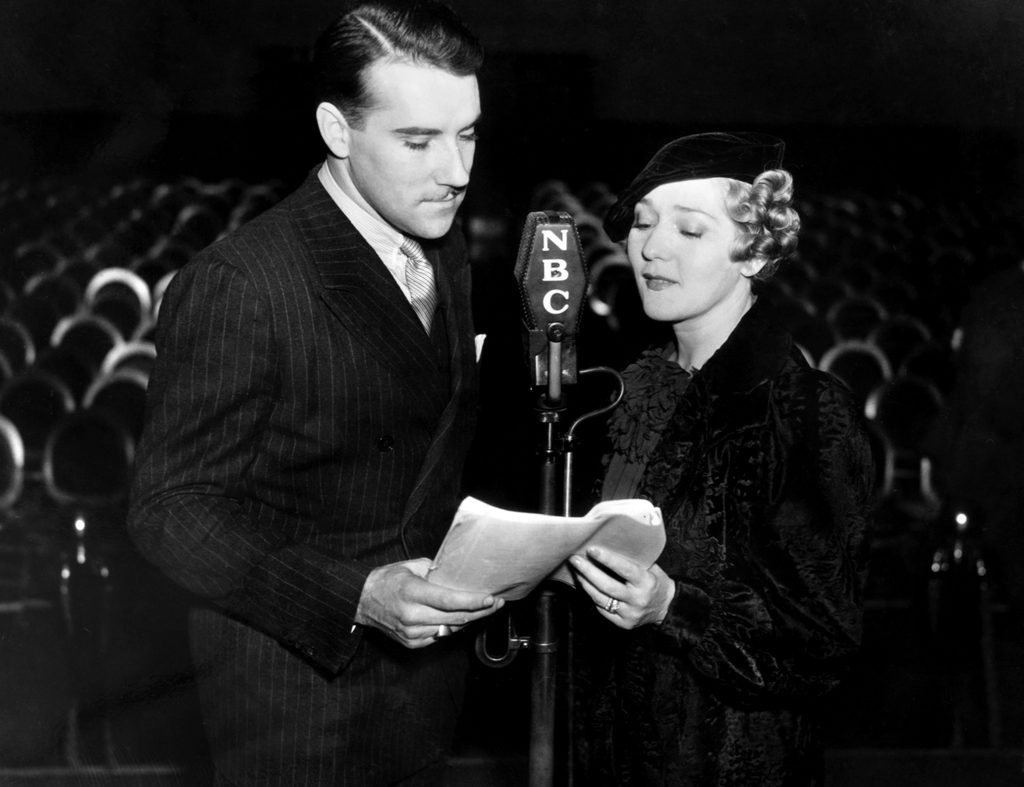
Mary Pickford And Company, From Left: Gale Gordon, Mary Pickford, 1934 (courtesy the Everett Collection)
It was radio that really transformed Gordon’s career. His distinctive delivery, extraordinary facility with dialogue and ability to create a character almost immediately made him one of the medium’s most dependable performers. He appeared in dramatic productions, adventure programs and comedies, eventually becoming particularly adept at portraying pompous authority figures whose dignity could be demolished by the people around them.
GEOFFREY MARK: “Gale Gordon was on everything. Gale was a regular, semi-regular or guest star on almost every sitcom on radio there was. He was one of those actors in Hollywood who was running between NBC and CBS because their studios were close enough that you could. He was just doing different shows at different times. Every day. And I don’t mean one-liners. I mean major parts and in some cases a regular with a regular character. He was making a fortune, but he always took on more work because he could. He was one of those wonderful actors like Mel Blanc, who could walk in with one rehearsal, get a character, know what he was doing and deliver the performance they needed. Except for Jack Benny, radio did not rehearse the way television did. There were two or three rehearsals and he went on the air. That’s why they called it stealing money, because no one was memorizing anything. There’s no costumes, there’s no blocking. It’s just getting the timing right for the ha-ha-ha. Gale was incredibly funny, very capable at creating characters. At just the right intonation, he was able to just hit a home run with punchlines. Gale played Flash Gordon on radio. He was Mayor LaTrivia on Fibber McGee and Molly. And then he was on The Great Gildersleeve, which is also a huge radio show.”
The actor also starred opposite Bea Benaderet in the 1950 radio comedy Granby’s Green Acres, playing John Granby, a city man who moves to the country and attempts to become a farmer. The premise anticipated certain elements of the later television sitcom Green Acres, although the two productions had different casts and settings.
GEOFFREY MARK: “Meaning not Hooterville because that had not been invented yet. But the concept of the wife and the husband and Eb was called Eb, the handyman who makes no sense. That was already there. It was a summer replacement series that did not go beyond the summer.”
Gordon’s career was interrupted during World War II. He joined the United States Coast Guard in December 1942, served in the Pacific and was discharged in September 1945 as a chief gunner’s mate. After returning to civilian life, he resumed his place among radio’s most recognizable performers.
Gordon’s explosive temper tantrums became his trademark, but he understood that the most important element of his technique was often what happened before the explosion. He could build anticipation through silence, allowing the audience to imagine his reaction before he delivered it.
GALE GORDON: —The Herald-News, July 11, 1951: “Then, at last, I come out with a very flat remark. Maybe something as simple as the one word, ‘Yes.’ It is doubly funny because everyone listening knows that you fought off a temptation to explode into something more violent. The ear helps a little, but the eyes never. I have one infallible rule—never look at the audience. I build up the silence by showing frustration, exasperation. But you can’t hold it too long.” (The Herald News, July 11, 1951)
“If you wait, the audience supplies what you are going to say. You put the onus on the audience, so to speak.” (The Roanoke Times, October 6, 1962)
GEOFFREY MARK: “It was because he had such a distinct delivery on radio where you could not be seen. The people who worked all the time are people who had very distinct voices and deliveries because all the humor had to come out of how you said something. People like Bea Benaderet and Mel Blanc and Shirley Mitchell and Doris Singleton worked all the time. They may not have been the star of a show, but they were working constantly. They were the second lead in a show. Gale was very handsome in his youth, he had leading man good looks, but leading man didn’t work out for him. Comedy actor worked out for him.”
Lucille Ball Enters the Picture
Gordon’s professional relationship with Lucille Ball began during radio’s golden age, when both appeared on The Wonder Show.
GEOFFREY MARK: “Lucille was a regular on the Jack Haley program. Gale was a guest playing a part that week and his part happened every once in a while. She was on every week and she loved his voice. Lucille Ball loved actors with unique voices who not only could say funny things, but could say things funny. And she never forgot that.”
Their collaboration continued with the 1948 radio comedy My Favorite Husband, which gave Gordon the opportunity to develop the kind of exasperated authority figure that would become his trademark. Just as importantly, it further established the comic chemistry between Gordon and Ball, a partnership that would eventually become one of television’s most enduring.
GEOFFREY MARK: “He got cast as the boss on My Favorite Husband. So Lucille Ball’s character, her husband’s boss was Gale Gordon, Mr. Atterbury, and Bea Benaderet played his wife, and they were the older couple who instigated monkeyshines with the younger couple. Different characters. They were upper-class wealthy, but the same dynamic. Gale Gordon and Bea Benaderet were not lovey-dovey and instigated the younger couple to each fight with the other one. ‘No, stand up for your rights. He can’t do that,’ kind of thing.”
The success of My Favorite Husband caught the attention of CBS, which saw the potential for bringing the popular radio comedy to television. But Lucille Ball had other ideas, most notably her insistence that her real-life husband, Desi Arnaz, play her husband on the show. The result was I Love Lucy, which premiered in 1951 and would become one of the most influential sitcoms in television history. Gordon was considered for the role of Fred Mertz, but his thriving radio career and the financial commitments that came with it made him reluctant to take a chance on the new series. The part ultimately went to William Frawley, although Gordon’s association with Ball was far from over.
GEOFFREY MARK: “Gale couldn’t do it because he was making so much money on these big successful radio shows that he wouldn’t take the small salary that was available in that first season of I Love Lucy. But he did come on towards the end of the first season. He played a character twice. The man buys the Tropicana nightclub and in one episode, Ricky wants to become the manager of the club and puts Lucy on a schedule. And poor Gale Gordon as his boss comes to dinner and hijinks ensue. In the other one, Lucy wants Ricky to ask him for a rais, Ricky doesn’t get the raise and gets fired. Lucy and Ethel and Fred change costumes over and over again playing unsatisfied customers up at Tropicana because Ricky Ricardo is not there.”
Our Miss Brooks and the Transition to Television
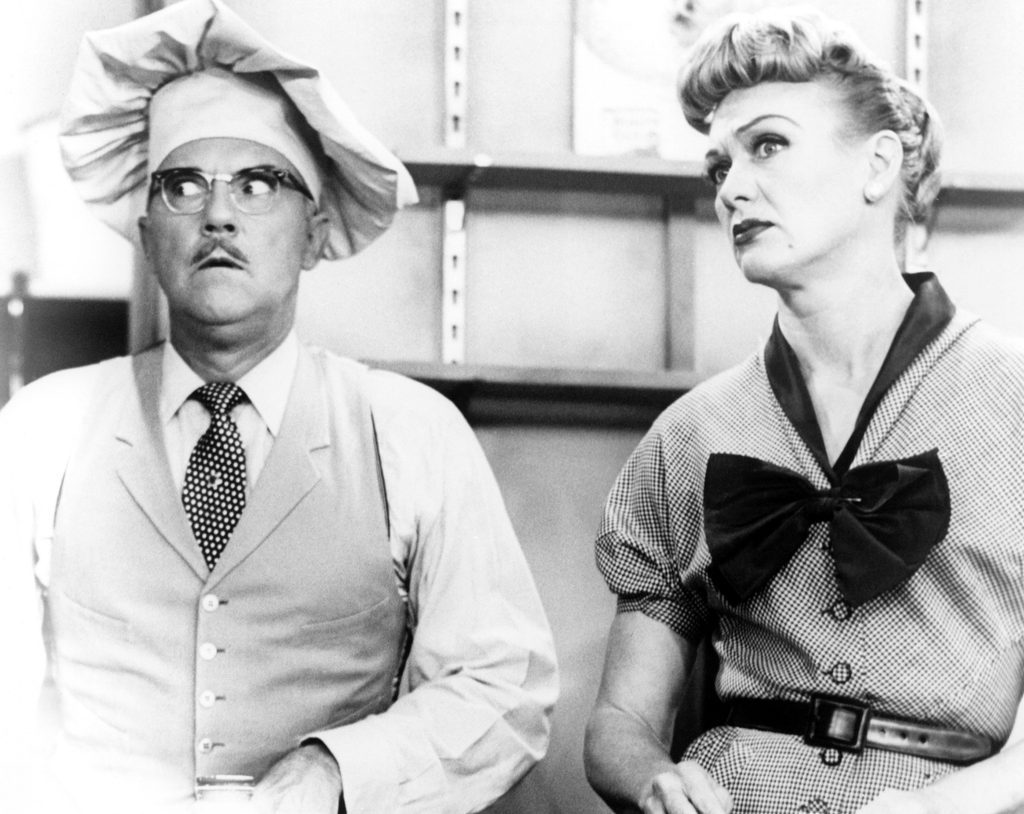
Our Miss Brooks, Gale Gordon, Eve Arden, 1952-56 (courtesy the Everett Collection)
While Gordon’s relationship with Ball was developing, he was enjoying enormous success as Osgood Conklin, the authoritarian principal on Our Miss Brooks. He originated the character on radio in 1948 and continued in the role when the series moved to television in 1952, opposite Eve Arden.
THE CINCINNATI ENQUIRER (January 31, 1953): “Gordon’s temper tantrums may unnerve Eve Arden as ‘Miss Brooks’ but they apparently are enjoyed by countless listeners and lookers who write to tell him how much they like his savagery.”
GALE GORDON: “The only experience I had with TV before The Alan Young Show was when I bought a set and tuned in the World Series this past season. Now that I’ve done one show, I have a healthy respect for TV’s appetite and its demands. I won’t have to be five different characters five times a week. I will be only one, or possibly two. I might even get to be Gale Gordon some day.”(The Daily Breeze, January 8, 1952)
GEOFFREY MARK: “Gale tries to move into starring parts on television. There was a sitcom called The Brothers starring Gale Gordon, and that lasted a season. He does Visit to a Small Planet with Jerry Lewis. Gale is working constantly, but he’s like the second lead in a lot of these things. The Brothers is the only show starring Gale Gordon. He was a regular on The Phil Harris-Alice Faye Show. He was a regular on a television sitcom called Sally. He was a semi-regular on The Danny Thomas Show. He had a co-starring role on Pete and Gladys. He was semi-regular on Angel. Angel was a sitcom that was created by Jess Oppenheimer after he left Lucille Ball’s work. It was not a hit.”
A Different Kind of Mr. Wilson
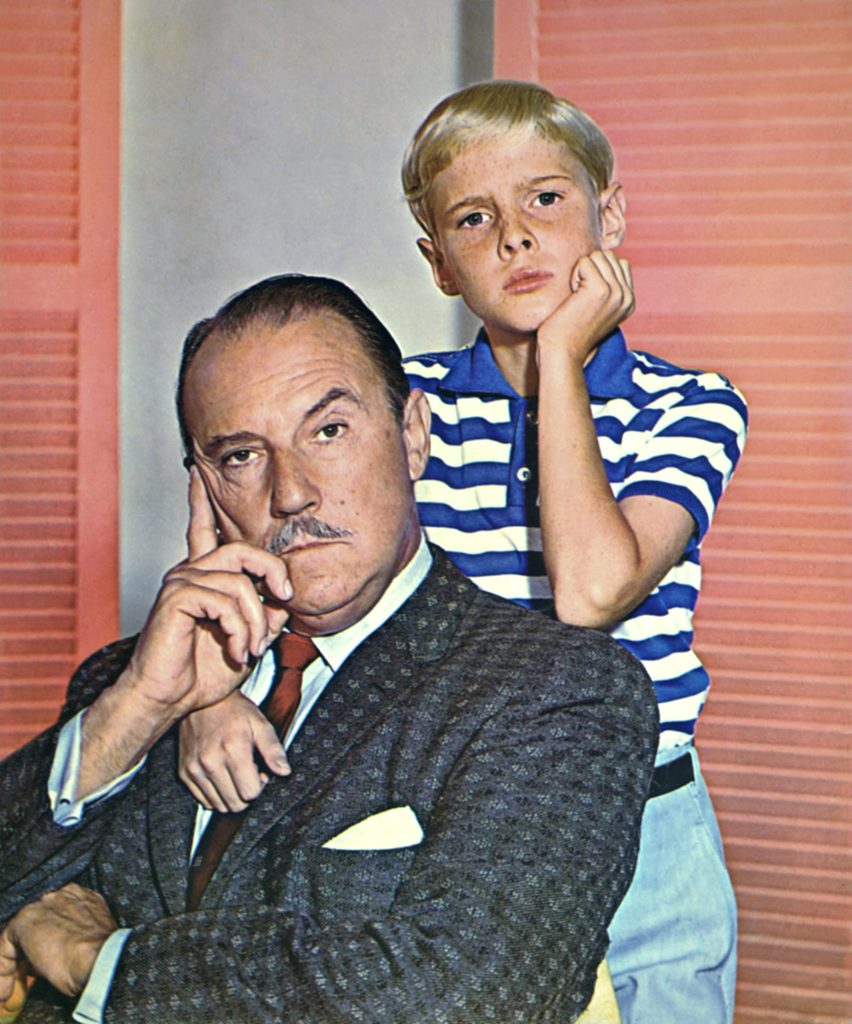
Dennis The Menace, Gale Gordon, Jay North, (season 4), 1959-63 (courtesy the Everett Collection)
In 1962, Gordon joined Dennis the Menace following the death of Joseph Kearns, who had played George Wilson. Rather than recast the role, the producers introduced George’s brother John, played by Gordon.
GEOFFREY MARK: “Timing is everything. When Joseph Kearns passed away on Dennis the Menace, they were in a pickle because they were in production, they had scripts already written. So they wrote in that Mr. Wilson that we knew and loved was away. His brother John was coming to visit for a while while he was away. It is some of the best sitcom work Gale did because he had a very strong director. The character wasn’t constantly screaming and over the top. It was much more subdued and it was much more subtle comedy. And it works. John Wilson is a likable character. You understand why he’s upset with Dennis. And then the next season, the final season of Dennis the Menace, the original Mrs. Wilson is written out. Now all of a sudden John has a wife of his own living in that house with that furniture as if it had only been he and his wife the whole time. The show is coming to an end anyway because my dear — may he rest in peace — friend Jay North was going through puberty early. And although his voice hadn’t quite changed yet, the joke on the set was, ‘We’re going to have to call him Mr. Dennis the Menace in a minute.'”
Gordon himself expressed affection for Jay North, although he had reservations about the pressures placed on children working in television.
GALE GORDON: “North is really a nice, bright, unspoiled kid, as are most of the youngsters in Hollywood — a real boy. I’d like to get him out of show business while there is still time. This is no place for a child to grow up.” (The Roanoke Times, October 6, 1962)
Mr. Mooney Changes The Lucy Show
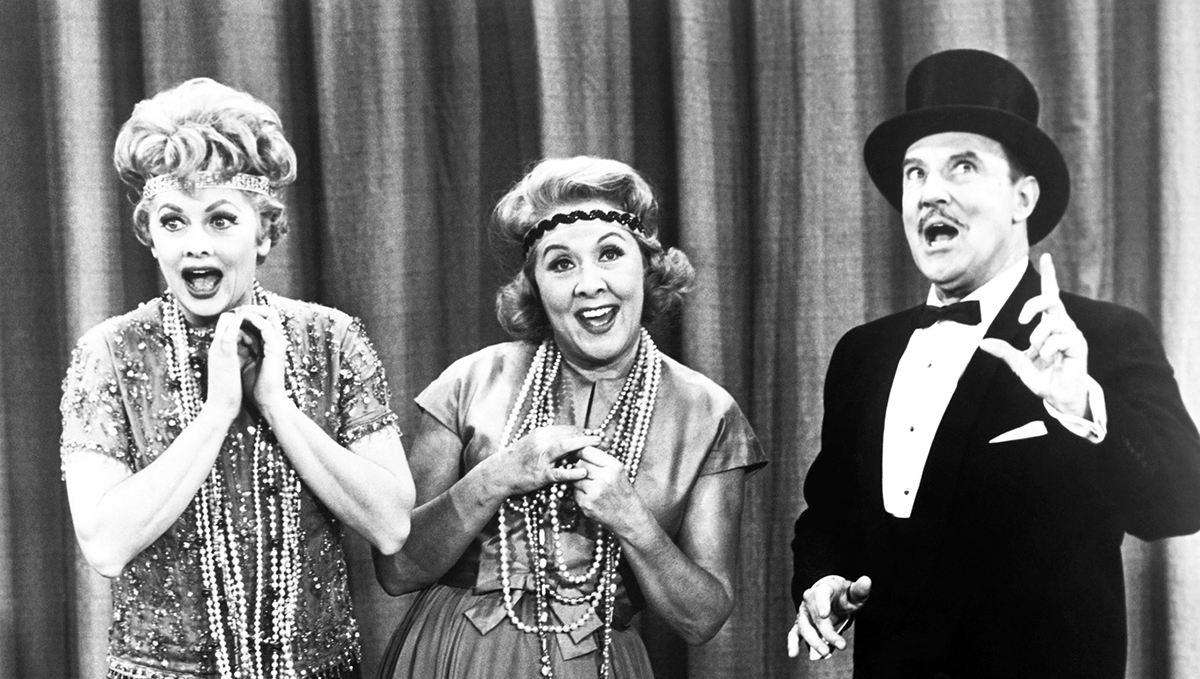
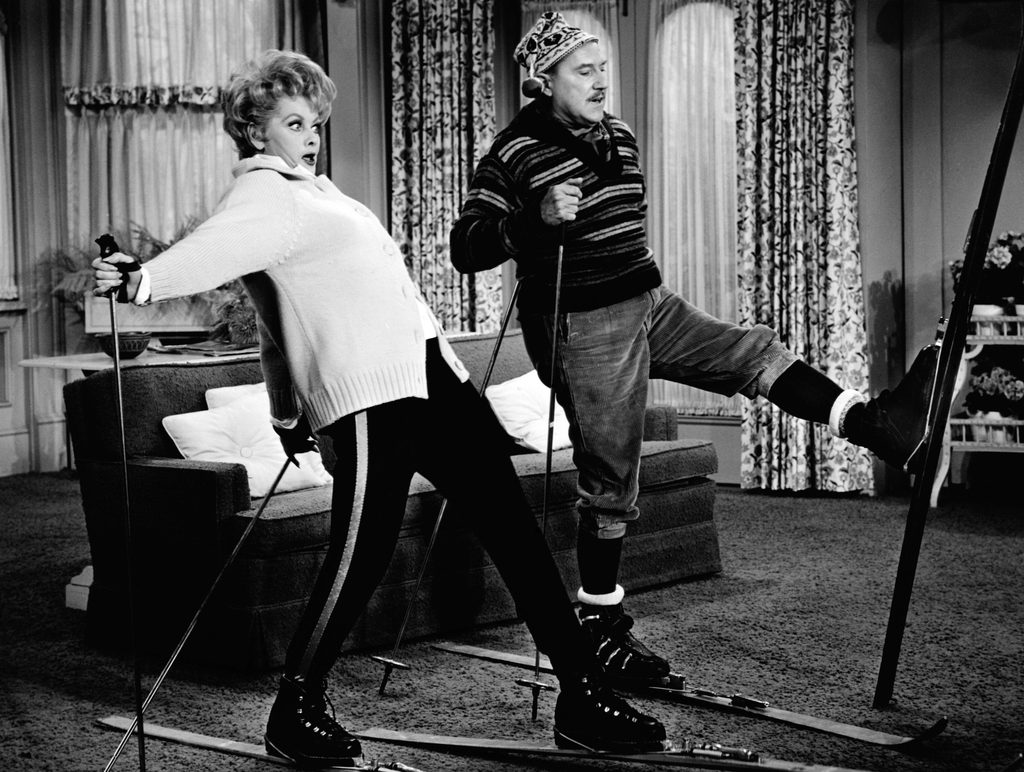
The Lucy Show, Gale Gordon, Lucille Ball, 1962-68 (courtesy the Everett Collection)
By 1962, Lucille Ball was preparing for a new chapter in her television career. Following the enormous success of I Love Lucy and the end of her marriage to Desi Arnaz, she faced the challenge of establishing a new sitcom identity without abandoning the qualities that had made her a star. The Lucy Show would introduce a different character, a different family situation and a new collection of supporting players. Yet there was one familiar performer Ball was particularly eager to have by her side, someone whose comic instincts she had admired since their earliest days together in radio.
GEOFFREY MARK: “While he was on Dennis the Menace, the decision was made to bring Lucille Ball back to television for The Lucy Show, for the 1962–1963 season. Ms. Ball very much wanted Gale to play Mr. Barnsdahl, the banker who gives her all the problems. Lucille Ball adored Gale Gordon, adored working with him, loved him as a human being, loved him as a friend, saw in him so many comedic possibilities, felt that Gale could be the guy the Lucy character runs up against in her schemes because she was not willing to do a romantic thing. She wasn’t going to give Lucy Carmichael a husband. She didn’t want the world to think Desi had been replaced, that Ricky had been replaced. That’s the reason for her being a widow on the show. But Gale wasn’t available, because he was shooting Dennis the Menace across town at Columbia.”
“When Dennis the Menace was canceled finally, Gale became available. As it turns out, Charles Lane, wonderful actor who played Mr. Barnsdahl, had mostly done film work. Working in front of a live audience was not easy for him. He had trouble with lines, he had trouble with cues, so Ms. Ball did not feel comfortable with Charles, although she loved him as an actor and had him on I Love Lucy several times. So the decision was made to replace Charles Lane with Gale Gordon and the writers wrote a very strong backstory, a two-parter. It wasn’t that Mr. Mooney was mean, it was that Lucy Carmichael trapped him in the bank safe overnight by mistake twice, giving him a reason to dislike her. He wasn’t the manager of the bank yet, but he was in charge of her trust fund. So if Lucy Carmichael needed 30 cents, she had to go to Mr. Mooney.”
The Lucy Show, Lucille Ball, Gale Gordon, (season 4, 1965), 1962-68, courtesy the Everett Collection
“Bringing in Gale Gordon changed the show. The show was supposed to be a widow, a divorcee, television’s first divorcee, by the way, sharing a house together at a time when no one would’ve thought twice about that. Today would be a whole different sitcom. And their children living together in one house to save money, these two 40-ish women [the other portrayed by I Love Lucy‘s Vivian Vance] against the world.”
GEOFFREY MARK: “So season two, Mr. Mooney grows. Not every episode is about him, but more episodes are about their interaction. By season three, the original writers went away and new writers came in. Milt Josefsberg, who was a Jack Benny writer, became the head writer of the show. All of a sudden, all of those cheap jokes that were given to Jack Benny are now given to Mr. Mooney. All of a sudden, Mr. Mooney really isn’t all that nice anymore. Now he’s just this cheap curmudgeon who hates Mrs. Carmichael and wishes she’d go away. There’s no warmth anymore.”
The changes continued after Vivian Vance departed as a regular and the series moved its setting from Connecticut to California.
GEOFFREY MARK: “Ms. Ball and Ms. Vance had a tiff. It was later straightened out, but Ms. Vance left the show. And at that point they said, ‘Well, what do we do?’ And they were almost going to walk away from The Lucy Show because she was also busy running Desilu Studios at that point. It was decided to change the format of the show, move Mrs. Carmichael to Hollywood, let her start wearing mod fashions, get rid of the kids, write them out of the show so that she’s a single woman who can date. And then, ‘Oh, ha ha ha ha ha. Mr. Mooney has been transferred to a bank in Hollywood also and he’s still her banker.'”
“Then they came up with the idea, ‘Well, what if Lucy works for him once in a while to make extra money?’ And that morphed in just a few weeks into all of a sudden she’s his secretary every week. And all of a sudden the trust fund that she’d been living on is no longer mentioned, the children are no longer mentioned. Vivian comes back once in a while as a guest playing the same character. But the show became Lucille Ball and Gale Gordon yelling at each other with guest stars.”
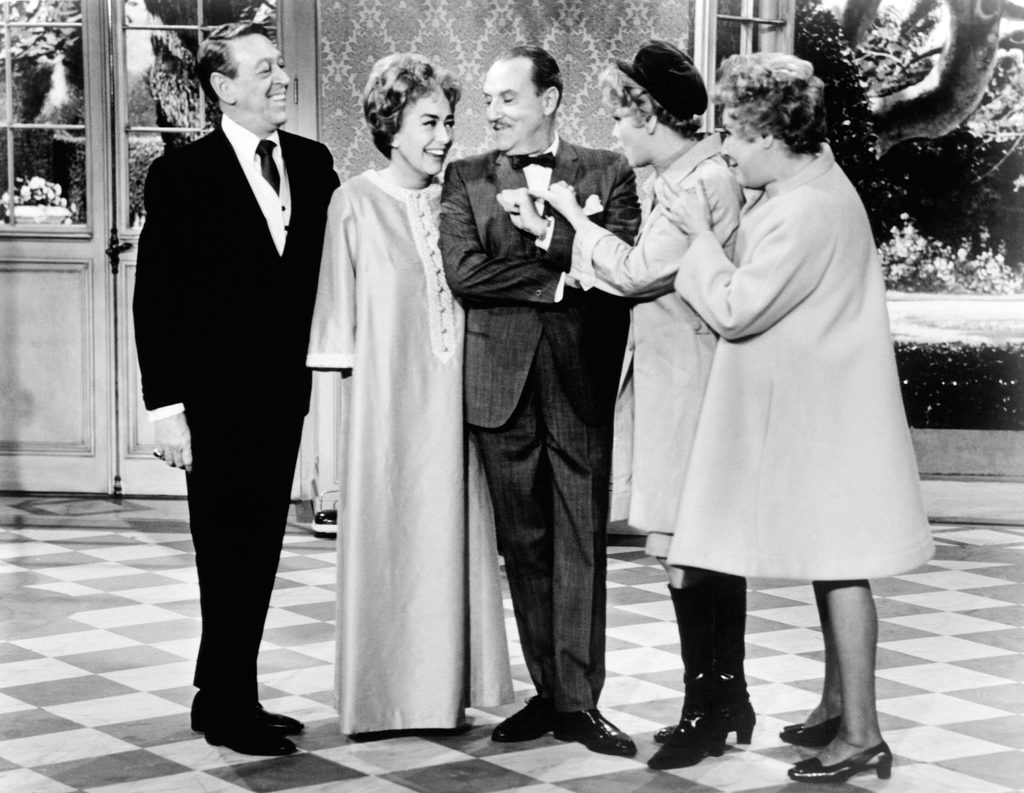
The Lucy Show, (L-R): Lew Parker, Joan Crawford, Gale Gordon, Lucille Ball, Vivian Vance (courtesy the Everett Collection)
Mark’s assessment of the later Lucy Show episodes is particularly interesting because he believes the writing increasingly sacrificed the character-driven comedy that had made the earlier productions successful.
GEOFFREY MARK: “The only negative thing I’ve ever heard about Gale Gordon is professional. I’ve never heard anything personal that was negative about him from anybody and I’ve spoken to hundreds of people who knew him. The negative came from people who worked on The Lucy Show and Here’s Lucy, is that for some reason at that point in his life, Gale was working over the top. He walked into the room and was already exploding. Some of it was the scripts. The man who directed the second season of The Lucy Show when he came in, Jack Donohue, used to pull Gale aside and say to him, ‘Why? That’s not how I directed you.’ He said, ‘I can’t help myself.’ Because the chemistry between he and Ms. Ball was so dynamic and her performing energy was over the top, so he felt he had to match it.”
“Part of it is also the writing. When the writers changed, they stopped writing character and started writing joke, joke, joke, joke, joke. While Milt Josefsberg was a great joke writer, he was the worst person for Lucille Ball to hire because the success of the Lucy character came from character. If you don’t write character, instead of being crafty, she’s now being stupid, which changes the whole dynamic of the thing. And if you watch the difference from one set of writers to another, second season, third season of The Lucy Show, you see the difference in Mr. Mooney. And then when they move the show to California, instead of his reacting to something Lucy does, I mean Lucy the character, he walks in reacting to something. As opposed to, ‘Good morning. What? You did that thing? Well, let me react to that.'”
“The success of I Love Lucy and the Lucy character of course rests on Ms. Ball’s shoulders, but it also rests with her original writers, Jess Oppenheimer, Madelyn Pugh, Bob Carroll Jr., later Bob Schiller, Bob Weiskopf, and having really strong comedy directors, the best of which was William Asher. Jack Donohue was also a very strong director. Jack had been a choreographer and a dancer, but he directed film and he worked with Ms. Ball and she trusted him and he understood the concept. Jack Donohue directed episodes of both The Lucy Show and Here’s Lucy that are the best episodes, but without that, Ms. Ball became this stupid kind of schemer and Gale’s characters became these nasty, mean, thoughtless, snobby people. They took the warmth out of the characters.”
“Lucille Ball had lots of talents. Lucille Ball understood a script in that she knew where the jokes were. She knew if a joke wasn’t right or in the wrong place. She would say, ‘Good joke, wrong place.’ But creating a situation, she had never had anything to do with that and what she did was all written out for her, all in the script. When it wasn’t in the script, she didn’t do it. Ms. Ball was probably the greatest comedy actress in show business history, but she was an actress. She was not a comedian the way Carol Burnett is.”
“Harvey Korman had a good assessment. I asked Harvey, why was Lucille Ball not so good on variety shows? Not even on Carol’s show as a guest star. He said Lucille Ball needed reality to ground her comedy and then once the situation was real for her, then she could satirize it. But if the situation wasn’t grounded and real to her, she didn’t know what to do with it. On I Love Lucy, we knew who her mother was, we knew where she came from, we knew more or less when Ricky came to the country. They would change some of the details if a script needed something different, but we knew where Fred was brought up. We knew where Ethel was brought up. We knew what they did before they met Lucy and Ricky. On Here’s Lucy, we know the same thing about these people six seasons later that we knew in the first episode.”
The Real Gale Gordon
Gale Gordon (courtesy the Everett Collection)
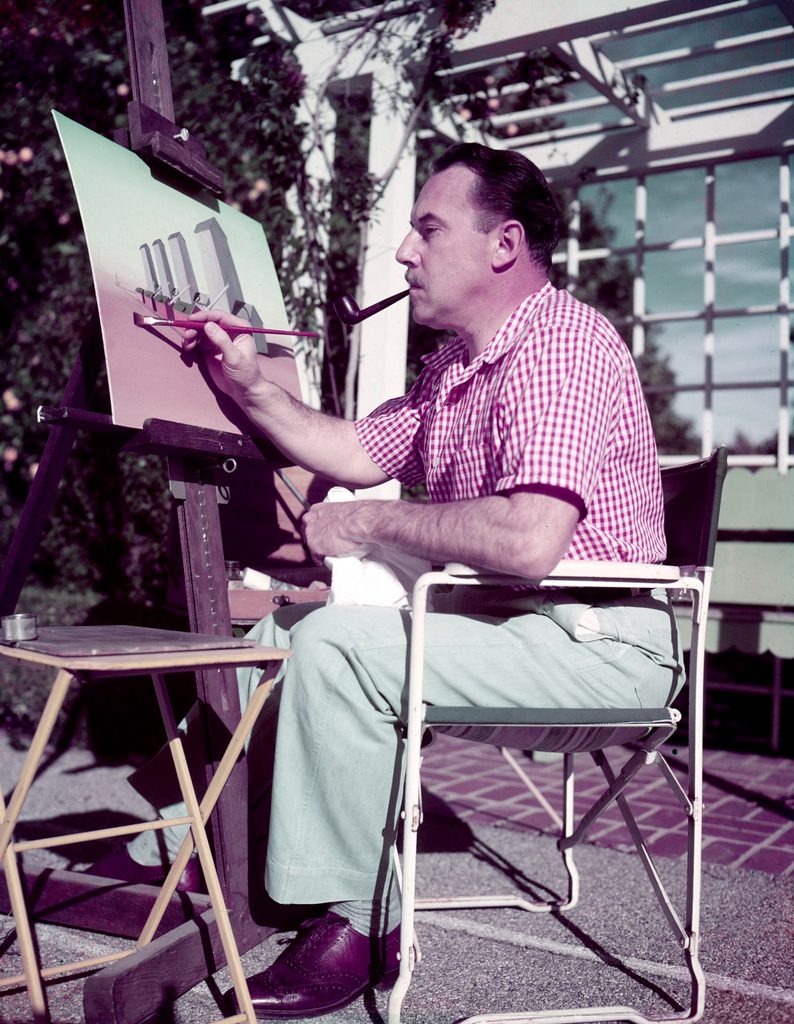
Away from the cameras, Gordon bore little resemblance to the volatile characters he portrayed. He and his wife, Virginia, maintained a home in Borrego Springs, California, where he enjoyed the quiet of the desert and pursued numerous interests unrelated to acting.
GALE GORDON: “I am a quiet man. I don’t have a temper. Most of my friends think I’m insane. They wonder what I do with my time out here. Don’t I miss the telephone? I tell them I read and think and work with my hands. I guess my attitude toward the public is a selfish one. I like my privacy and lots of time to myself. I like to relax and forget about cameras and Hollywood. Sometimes people look at me when I cash a check under the Aldrich name, but I can always explain it. I’m not a compulsive actor. To me it’s just a job to do. I turn it off as soon as I leave the studio. I couldn’t give you a single line of dialogue the next day. I can’t stand these actors who are always ‘on.'”
GEOFFREY MARK: “They lived in Borrego Springs all the way back to 1949. And he drove that 160 miles to work with Lucille Ball. Gale was the mayor of Borrego Springs out here in the desert. Gale lived out here in the desert with his wife. He commuted into LA to do all those shows with her. Lucille Ball gave him a Rolls-Royce as a gift one year for re-signing with her.”
Here’s Lucy and a Lasting Partnership
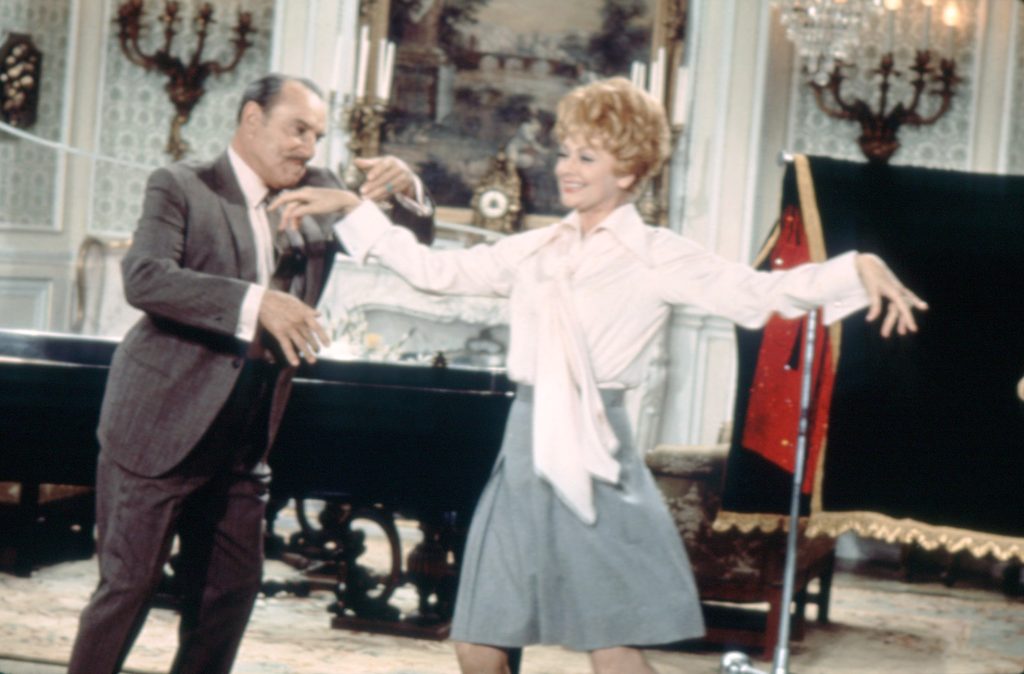
When The Lucy Show ended in 1968, Ball launched Here’s Lucy, with Gordon playing Harrison Otis Carter, Lucy Carter’s brother-in-law and employer at the Unique Employment Agency.
GEOFFREY MARK: “After six seasons, Ms. Ball sold Desilu Studios to Gulf and Western, which owned Paramount. Desilu and Paramount occupied the same city block off of Melrose Avenue in Hollywood. They just knocked down the wall between them. Ms. Ball wanted to own her own show and did not want Paramount to be her boss, so they quit The Lucy Show and came up with Here’s Lucy. And now there is nothing but animosity between the two characters at all. Gale is still screaming and yelling and doing many, many funny things.”
“The same basic character, but Uncle Harry is not as educated as Mr. Mooney. Uncle Harry is not as sophisticated as Mr. Mooney. Uncle Harry doesn’t have a wife that is referred to but never seen, which was a wonderful conceit. They dropped that. And then when Desi Jr. walked away from the show and then Lucie Arnaz started not being there every week because she was beginning to do summer stock and things, it became Lucille and Gale.”
Their relationship was more than a professional arrangement. Gordon spoke warmly of Ball in a March 1967 newspaper interview.
GALE GORDON: “Working with Lucy is a stimulating and gratifying experience because she is such a complete professional, such a perfectionist and gives so much of herself.” (The Post-Standard, March 18, 1967)
Life with Lucy: The Final Reunion
Life With Lucy, Lucille Ball, Gale Gordon, 1986, (c)aaron Spelling Productions Inc./courtesy Everett Collection
When Ball returned to series television in 1986 with Life with Lucy, Gordon was there again, playing Curtis McGibbon, the co-owner of a hardware store inherited in part by Ball’s character, Lucy Barker. The series was short-lived, but Geoffrey Mark offers a fascinating account of what he believes went wrong.
GEOFFREY MARK: “Gale returned to work with Ms. Ball on a special called Lucy Calls the President. He returns to work with Ms. Ball on Life with Lucy. Gale was pushing 80 at this point. It’s a terrible premise. Lucy Barker has recently inherited half of a hardware store business in Pasadena because her husband died. And his son is married to her daughter. So while he is away in Hawaii on vacation, the Lucy character moves in with her daughter and son-in-law and two grandchildren to save money and to help out with the kids because son-in-law is going to law school and maybe the daughter works or not because they were so not specific about these characters. You knew nothing about them. Gale’s character comes back from vacation, finds out that Lucy has moved in, and he decides he’s moving into the house also to protect the grandchildren from her.”
“The house only two rooms, a great room that has a dining room table, a kitchen. The great room has a staircase going upstairs. The kitchen has a staircase going upstairs. That’s all there is downstairs. But upstairs, there’s a room for the husband and wife, a room for each child, a room for Gale, a room for Lucy. There’s five bedrooms on this thing upstairs.”
“You can only imagine how many funny episodes there can be about a hardware store. They brought in some guest stars, Ruth Buzzi, John Ritter. The best one was they brought in Audrey Meadows to play Lucy’s sister. That worked and they were going to sort of count on that. They were going to bring Audrey in as a semi-regular. But six episodes aired and that was the end of that.”
Mark also recalls a conversation with producer Aaron Spelling, whose company coproduced the series.
Gale Gordon, 1957 (courtesy the Everett Collection)
GEOFFREY MARK: “Aaron Spelling said to me, ‘I let Lucille Ball down,’ because he was the co-producer of the show. It was Aaron Spelling Productions and Lucille Ball Productions. And he said, ‘I thought that Gary Morton [Lucille’s husband] knew what he was doing and that they’ve been so successful.’ He said, ‘I wish I had been part of the planning.’ Just like on Here’s Lucy, you know nothing of the backstory of these people. Why is son-in-law going to law school? If he’s got kids who are almost 10, why is he just now in law school? And what is daughter doing? They kind of almost talk about her going to work, but is she? Is she not? Who’s been paying the bills and all of this anyway? And how long ago did Lucy’s husband die that they’re just now fighting over ownership of the place? Nothing is thought out.”
The failure of Life with Lucy came during an emotionally difficult period for Ball, with Desi Arnaz’s death occurring in December 1986, shortly after the show’s cancellation.
GEOFFREY MARK: “You talk about bad timing. They start shooting a show. It airs. Desi dies. The show is canceled. Lucy’s given the Kennedy Center Honors live right in the middle of all of this. Desi was supposed to have been there to honor her, but instead, Robert Stack reads a letter from Desi.”
For Gordon, Life with Lucy marked the final chapter in a professional relationship that had begun nearly half a century earlier. He died on June 30, 1995, at the age of 89, shortly after the death of his wife, Virginia. His career had encompassed virtually every major form of American entertainment during the 20th century, but his work remains familiar to viewers who continue discovering classic television through reruns and streaming.
GEOFFREY MARK: “He did two episodes of I Love Lucy that have been rerun endlessly and because he was on Our Miss Brooks, which in the ’60s and ’70s was rerun endlessly; because he was on The Lucy Show, which was rerun endlessly, Here’s Lucy is still available on platforms and is being seen. It’s the rerun factor as to why people still know who he is. Why do people know who Mel Blanc is? Because they’re still watching The Flintstones and they’re still watching The Jetsons. They may not know what he looks like, but they know that voice. Even, bless his heart, Frank Nelson.”
Perhaps the most revealing aspect of Gordon’s career is the contrast between the performer audiences remember and the private individual described in contemporary interviews. He made millions laugh by portraying men who seemed incapable of controlling their emotions, yet he was himself a quiet, thoughtful man who preferred the peace of the desert to the excitement of Hollywood. When asked to sum up Gale Gordon’s life and career, Geoffrey Mark offered a description that captures both sides of the man.
GEOFFREY MARK: “A shy, loving soul who over the course of six decades made the entire world laugh.”