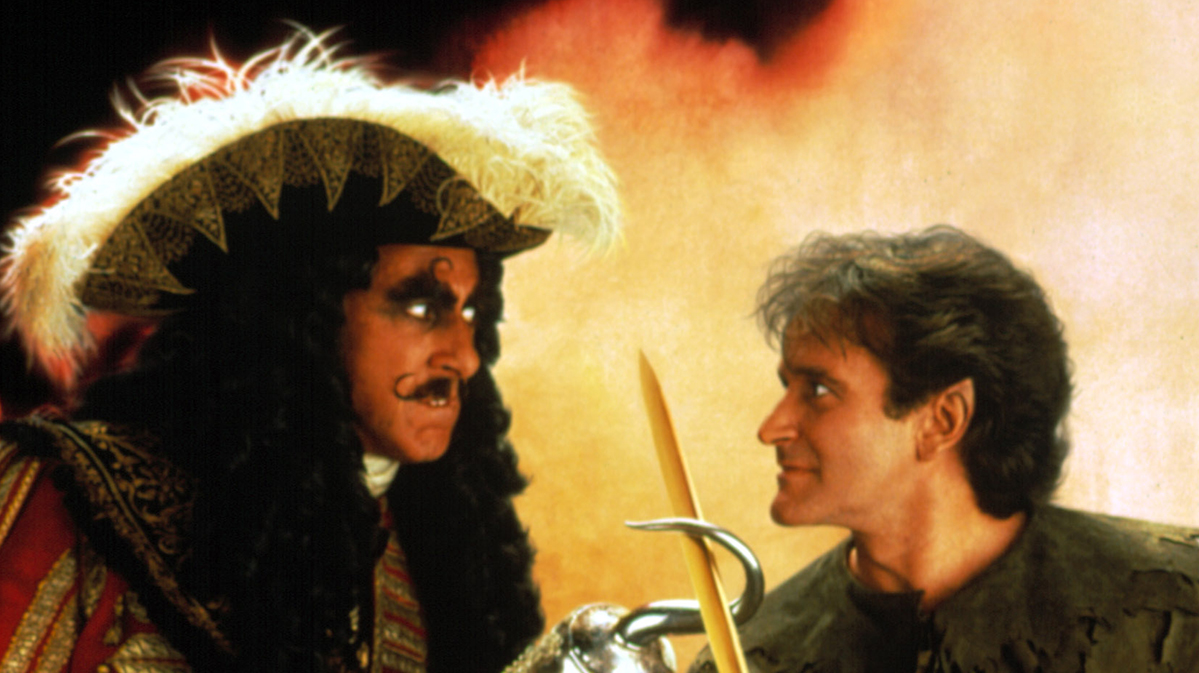
Thirty-five years ago, Steven Spielberg invited audiences to return to Neverland with Hook, a sequel of sorts to J. M. Barrie’s Peter Pan that asked a question nobody had seriously explored before: What if the boy who never grew up actually did?
Released on December 11, 1991, Hook starred Robin Williams as Peter Banning, a workaholic attorney who has forgotten his extraordinary childhood as Peter Pan. When his children are kidnapped by the vengeful Captain Hook (Dustin Hoffman), Peter must rediscover the boy he once was to save them. Julia Roberts played Tinker Bell, with Bob Hoskins as Smee and Maggie Smith as the elderly Wendy.
Despite its impressive pedigree, Hook received mixed reviews, and Spielberg himself would spend years expressing dissatisfaction with the finished film. Audiences, however, had other ideas. Over the ensuing decades, Hook became a beloved family favorite, embraced by generations who connected with its themes of childhood, parenthood, imagination and the importance of never completely losing touch with the kid inside.
As Hook celebrates its 35th anniversary in 2026, screenwriter James V. Hart looks back on the film’s unlikely journey from an idea suggested by his six-year-old son to a Hollywood blockbuster whose popularity has only grown with time.
In this exclusive interview, Hart reveals how Spielberg became involved, why Williams was always his first choice to play Peter Pan, the very different Captain Hook he originally envisioned, the surprising involvement of Carrie Fisher in shaping Tinker Bell and the behind-the-scenes battle over Rufio’s fate. He also reflects on Spielberg’s complicated relationship with the movie and why, 35 years later, its emotional impact may be greater than ever.
ED GROSS: Is it mind-blowing to you that it has been 35 years since Hook came out? I don’t even know how that’s possible.
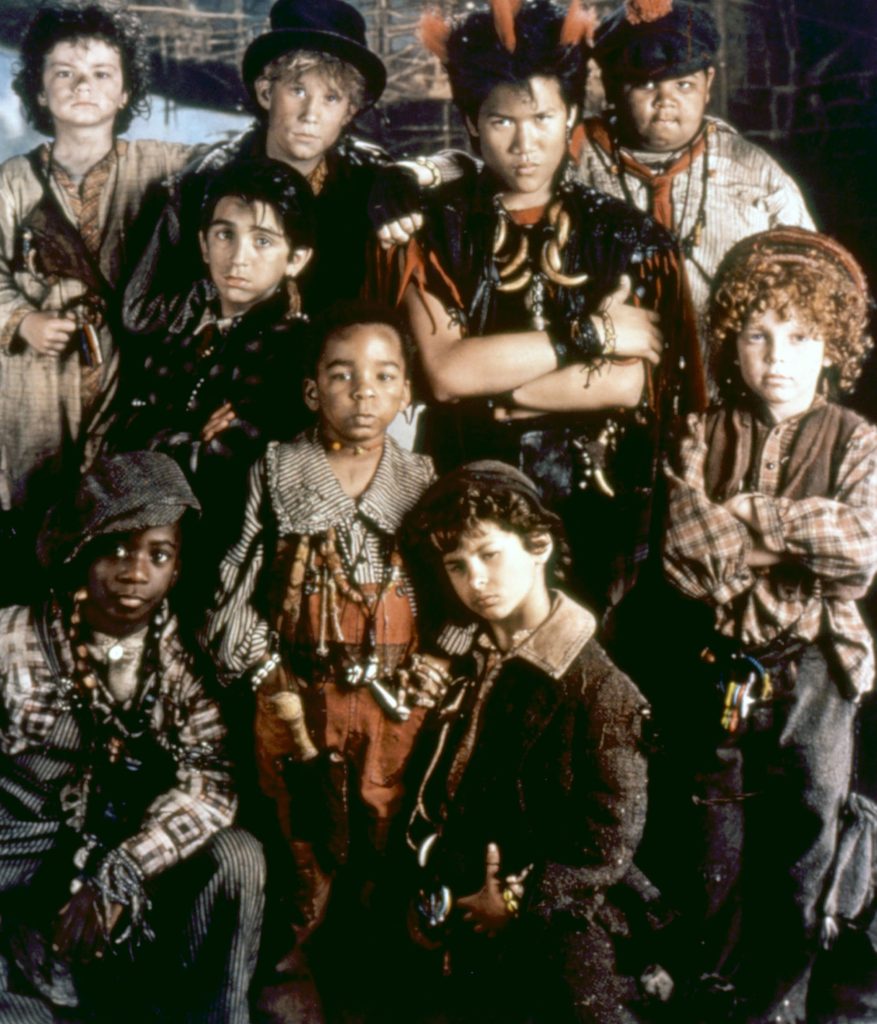
JAMES V. HART: Well, you can tell by looking at the Lost Boys and our kids, who are now in their 40s. And Dante Basco, who played Rufio, just turned 50. What’s interesting for us as a family, this has been Jake and Julia’s entire life. They grew up with this project from the age of three and six. For them, it’s been their generation’s Lord of the Rings. For me, it was Lord of the Rings, and for them it was Harry Potter and Hook. And it’s interesting because Steven Spielberg, for years, did not have kind things to say about Hook. In spite of its success that came in the afterlife, after the initial release and the bad reviews and some of the disappointing things people beat the drum about, they weren’t really paying attention to the audience.
When the kids first saw the film and my wife saw the film, they wouldn’t speak to me for three or four hours because they knew what wasn’t in the movie. They knew what was in the script that was not in the movie. But then I took them to see the movie with an audience here in New York, and the audience doesn’t know what’s not there, they only know what is. And it’s ultimately the audience that determines your success or failure, not how good a filmmaker you are or how brilliant your script is or how great the cast is. The audience decides whether or not you’re a success.
I’ve known from the very beginning, just watching the audience respond to the film back then, that it was going to be around for a long time. Every four or five years there would be some other kind of resurgence, or people would come up to you and say, “Oh, Hook, we saw it with my parents. I’m showing it with my grandparents. Now I’ve got kids and now the kids have kids.” So it became like The Wizard of Oz. Over the years, the audience kept getting bigger for the film, not smaller. Most films come out and do their thing and then dissipate, but Hook was like an annuity for us. The best investment I ever made was writing that script. The residuals have continued every quarter.
And then you begin to get requests: Can you show it at a festival? Can we do a seminar? Can you do a workshop? We screened it last year at the Austin Film Festival back to back with Dracula, daytime and nighttime, and the old Paramount Theater in Austin sold out. There are kids who’ve never seen it before, or people who’ve never seen it on the big screen. And I think Robin’s performance and Maggie Smith’s performance and Bob Hoskins’ performance, Arthur Malet’s performance, now that they’re gone, it’s a very emotional experience. Our daughter Julia, who’s a director and writer, and her husband, who writes and produces with her, called us late one night in New York. They were very emotional. Julia said, “We watched Hook after we put the kids to bed.” They’d never seen it together as husband and wife. She said, “It’s a completely different film when you have kids, when you’re an adult.” I said, “Now you get it.”
It’s a multigenerational story that came from my six-year-old son, Jake. I never would have written that script if I hadn’t had kids. When you see it now, you marvel at what Robin did. Steven’s name is on it as director, and he created all this magic. It took three decades for him to wake up and go, “Oh, this is really good.”
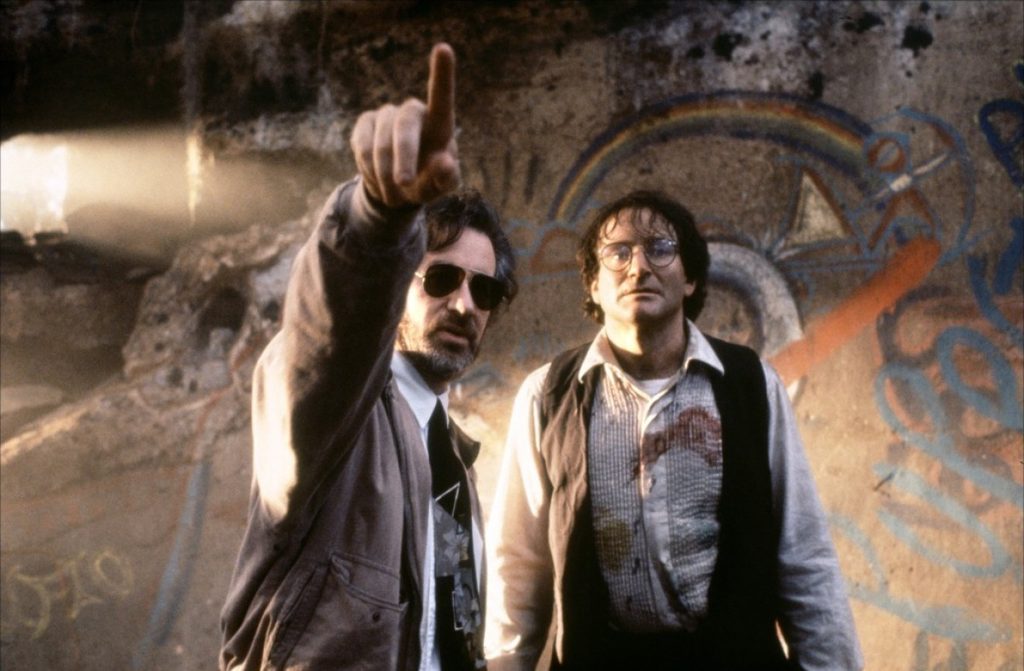
ED GROSS: How has Spielberg’s attitude changed? I’ve read comments where he seemed very down on the film.
JAMES V. HART: I think, one, he got tired of people saying, “Hook’s great. Hook’s great. Hook’s great.” He even says that people want to talk to him more about Hook than they want to talk about E.T. That’s a huge admission. It’s almost like he couldn’t avoid the tsunami. I know Steven had problems and I don’t want to get into too many of them, but I know that act two was a bugaboo for him. I think he needed six more months on the script to make it his. I wrote it without him; I wrote the script for TriStar with no Steven Spielberg. It was brought to him. He had this vision of Peter Pan that he’d always wanted to do, and he’d always wanted to do a musical. So I think he kept layering what he wanted to do with Peter Pan onto Hook. There are even musical numbers that I think were going to be on the new DVD. But I feel he never landed act two the way he wanted to land it.
ED GROSS: Describe act two for me. Where does it begin?
JAMES V. HART: London is act one. Peter dropping into Neverland is the beginning of act two. London is interesting because my favorite part of the film is the bookends and pieces of the middle. I know Steven was very, very happy with London. We all were, and very happy with the emotional ending back in London. Those were great bookends. I remember saying to him after we were reviewing the dailies on London, “Man, you better have your shit together in act two when you get to Neverland, because London really does work and it really does raise that anticipation of what’s going to happen when he gets there.”
Act two is not edited the way Steven shot it. It’s restructured. Michael Kahn, Spielberg’s longtime editor, edited the film the way I structured it. You’ll see continuity mistakes, him in a clean tuxedo after a food fight, but it makes logical sense in terms of the story. I think he was asked recently, “If there were any movie of yours you would redo, what would it be?” He said, “Hook.” And he said, “Act two.” It was a struggle, but I love the emotional beats in act two. I think he got lost with some of the toys and games. The Neverland set was a huge thing. Then you have that magic moment, “Oh, there you are, Peter,” when the kid pushes his face. That’s Steven. I didn’t write that. That’s Spielberg, and maybe screenwriter Malia Scotch Marmo, who came in to work on Dustin’s role. It took years of the movie continuing to be a success and the audience getting bigger. Finally, I think he recognized that, even if he didn’t understand why, it’s a huge phenomenon.
ED GROSS: You said the original idea came from your son Jake. How did that happen?
JAMES V. HART: Jake sat behind Steven almost every day on the set. Steven was very generous that way. Robin used to come up to Jake, because it was Jake’s idea. He’s the one who said, “What if Peter Pan grew up?” when he was six years old. Every day Robin would come up to Jake and bow and go, “Thank you, Jake-san, for my job. Thank you, Jake-san.” That’s when I began to realize writers are job creators. If I hadn’t written Hook and had all the help we got from Steven and Malia and the cast, all those names in the end credits wouldn’t exist. They didn’t have a job until we typed “The End.”
Like I said, the idea came from Jake. We used to play a game at the dinner table when I was trying to get work called the What If Game. We would take a “what if” and apply it to a fairy tale or a well-known story and try to stand it on its ear. What if Cinderella’s glass slippers broke or didn’t fit? What if Prince Charming had bad breath and Sleeping Beauty didn’t want to kiss him? Jake was six, I think, and Julia was three. Jake said, “Hey, Dad, did Peter Pan ever grow up?” And I went, “That’s a stupid question. Of course not.” What a good parent I am. Then Jake said, “Yeah, Dad, but what if Peter Pan grew up?” That was it. I went, “My God, that’s it. That’s what everybody’s been trying to figure out.” Steven wanted to do Peter Pan, Francis Ford Coppola wanted to do Peter Pan, Michael Jackson wanted to do Peter Pan, John Hughes wrote a Peter Pan script. But they were always about the same thing.
It was never about Peter being a grown-up. We hammered out a story that night at the table, and the first thing we figured was the worst thing we could do to Peter Pan if he grew up was make him a lawyer. He forgot how to fly, became a capitalist, stopped believing in fairy tales. I think part of the appeal to Steven and Robin and Dustin was that we were fathers. We had families. We’d grown up physically, become these capitalists, materialistic, in spite of what we claim to be: “Oh, we’re such big kids.” That’s what attracted everybody to the project, the adult who had forgotten what it was like to be a child.
ED GROSS: And this was before Spielberg, before anything, that you were thinking of Robin Williams?
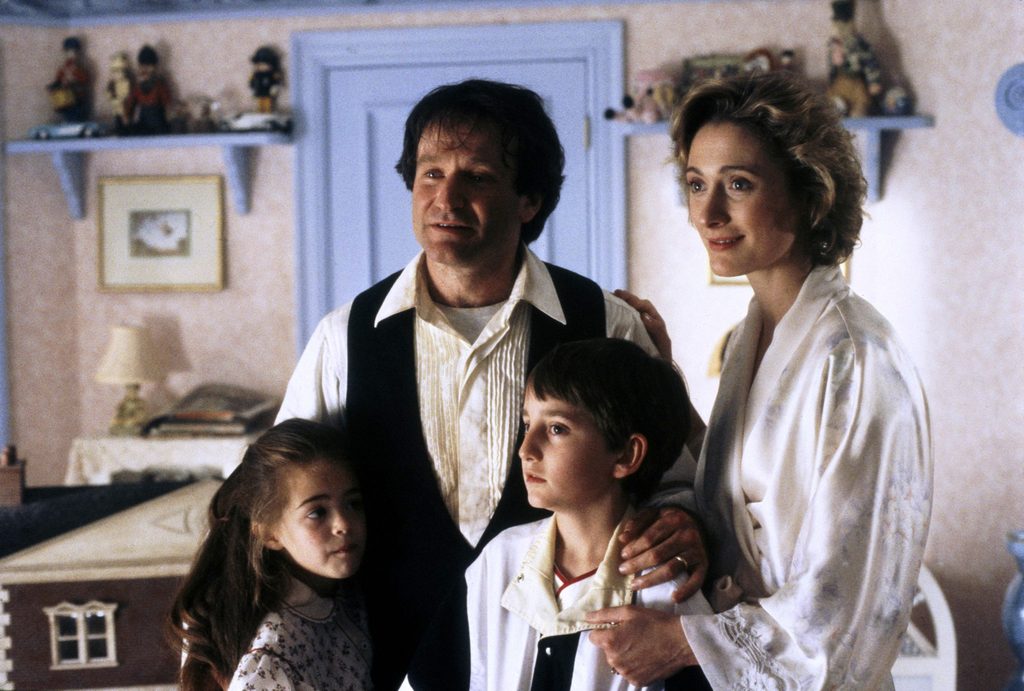
JAMES V. HART: When I wrote the script, I’d never done this before, but Robin was the only actor in my mind who could play grown-up Peter Pan. I said, “If you can’t get Robin, don’t make the movie.” I had no idea about all this because it went on without me knowing. Director Nick Castle had come on to direct and do the story with me. He’d done a beautiful film called The Boy Who Could Fly. Hook had sat on the shelf for four years. I pitched it everywhere. Nobody wanted to do it. “Walt Disney, they’ll come after us.” “Nobody’s going to believe a grown-up Peter Pan.” Everybody passed on it, everybody twice. One executive said, “God, that’s a great story. It’s really powerful, but I just don’t believe adults can fly.” That’s the whole point of the movie! This meeting is over.
ED GROSS: How did the project finally get made, and how did Spielberg come aboard?
JAMES V. HART: Finally TriStar made us a sweetheart deal because they were doing a favor for Nick. They left us alone, gave us a little bit of money. So we spent a year smoking cigars and drinking wine and telling fart jokes and writing Captain Hook and Peter Pan and grown-up Peter Pan. When we turned the script in, the studio head had changed. Film executive Mike Medavoy had taken over TriStar. Usually when a new head comes on board, they cancel everything in development. Mike, to his credit, read Hook and went, “Wait a minute, this is huge.” Sony had just taken over Columbia TriStar and was looking for a big tentpole movie. Mike saw it as a perfect opportunity to attract a major filmmaker. I knew none of this. I was trying to pay the light bill and keep the phones on. Medavoy got CAA involved, which was my agency at the time. They picked five directors.
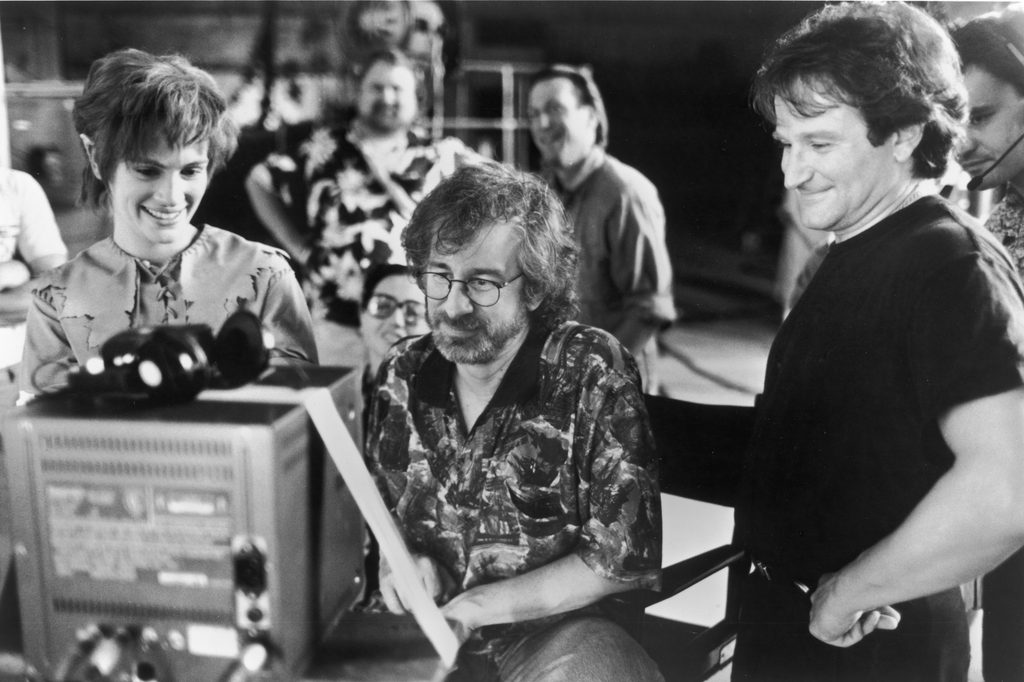
The strategy was to go out to all five on a weekend, and whoever phoned first and said, “I’m in,” would get the gig. It was Spielberg. Again, I knew none of this. We were in Montana visiting friends who’d loaned us money while I was writing the script. I called John Levin, who’d been my agent and manager and friend for decades. Usually when you call, he’s in a meeting or out for the afternoon. John got right on the phone. He said, “A very important director wants to direct Hook.” I said, “We have a director. It’s Nick Castle.” John repeated, “We have a very important director who wants to direct Hook.” I said, “Well, if it’s not Spielberg, we’ve got nothing to talk about.” He said, “That’s who it is.”
I went back upstairs to the family and tried to be cool and nonchalant. “Well, yeah, Spielberg’s going to direct Hook.” Gobsmacked. That was the beginning of the whole adventure. We’d known Steven early in our careers, and Jake had actually done an episode of Amazing Stories that television director Joan Darling directed. The fact that it was Jake’s idea made it more powerful for Steven to embrace. It came from a child, not a grown-up. Once he came aboard, sky’s the limit. All the ideas I’d been told were too expensive, he had, like the baseball game. That wasn’t in my original script, but the father not going to the baseball games was. Naturally, with Steven Spielberg, you pay it off in Neverland.
ED GROSS: Was working with Spielberg what you expected?
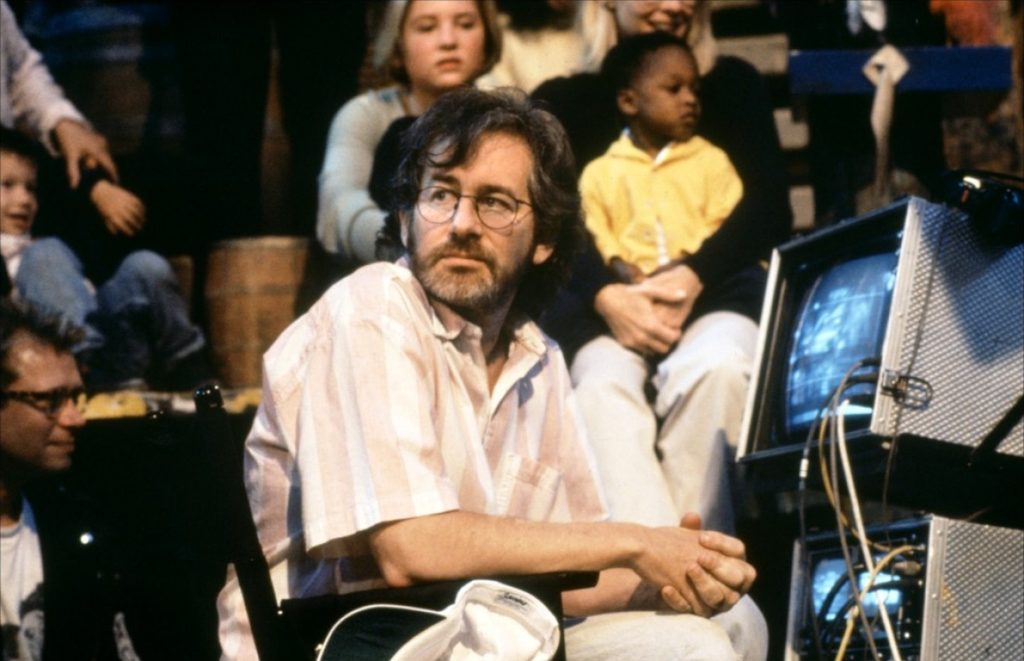
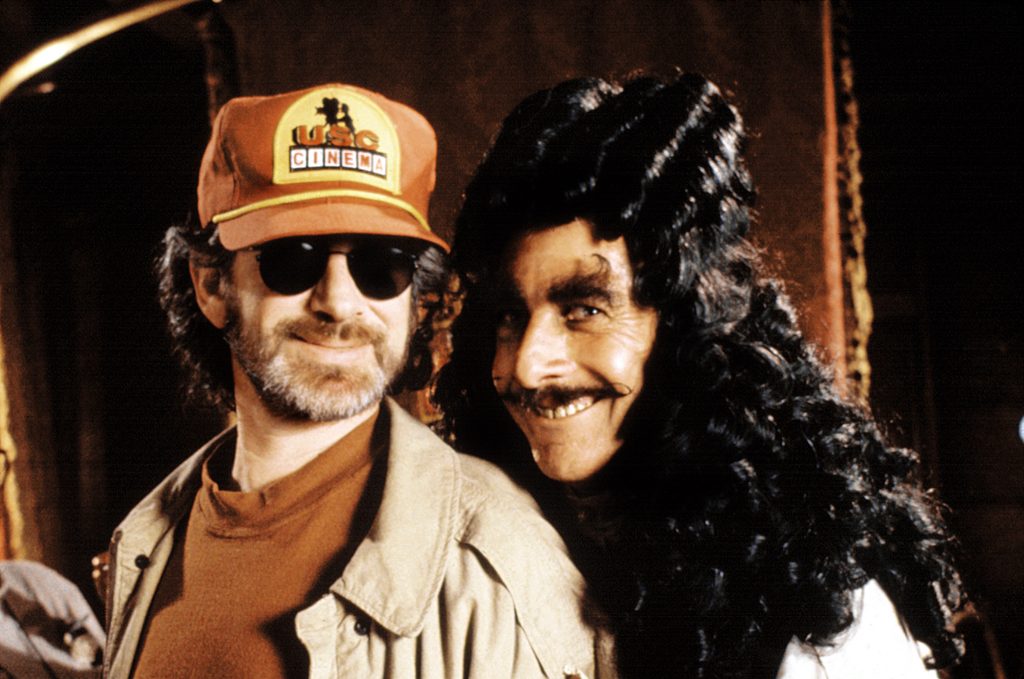
JAMES V. HART: The great experience I had was watching his mind work and being privileged enough to witness the struggle he went through. I formed a new respect for directors. I watched what Coppola and Steven went through on Hook and Dracula. These were two masters, and they had to struggle and fight every day to get something they wanted on the screen. I asked Steven what percentage of what was in his mind or in the script he was used to getting. He said he used to be happy with 70 percent, then that reduced to 50. On Hook, I think he said, “If I get 25 percent of what I want to get, I have to settle for that.” I think that’s also part of the problem he had with the film. It was a very demanding, taxing shoot, and he had major movie stars to deal with.
ED GROSS: You mentioned Dustin Hoffman. Was he the Captain Hook you envisioned?
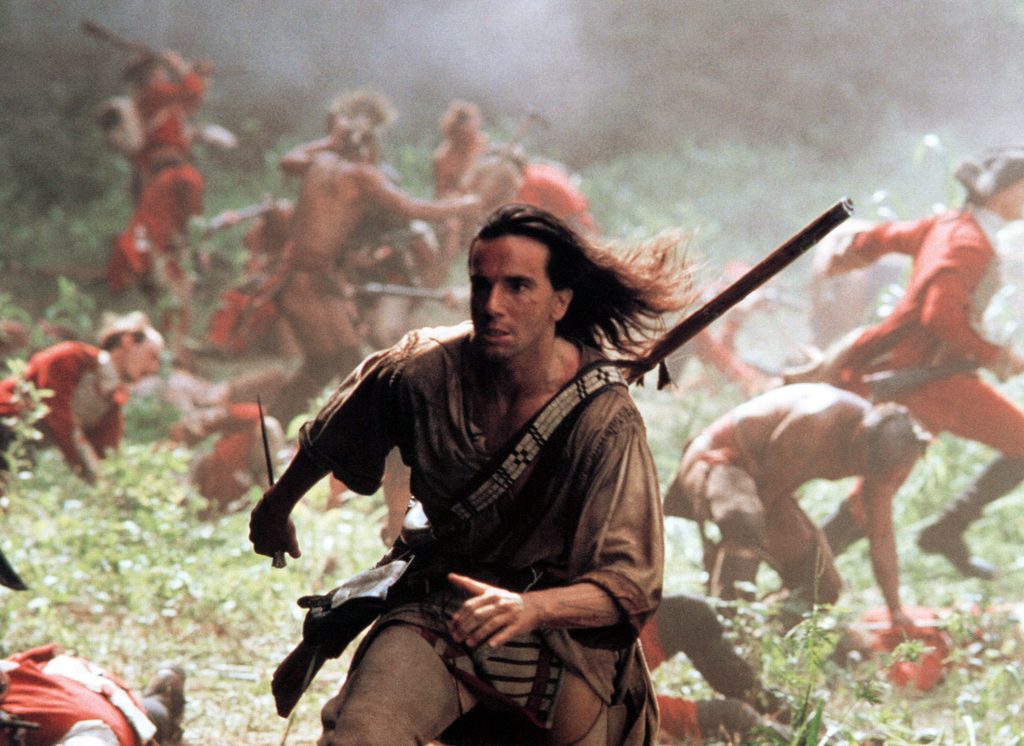
JAMES V. HART: Robin and Dustin committed to the film before it went to Spielberg. John Levin took the script to them. They attached themselves, and they’re the ones who picked the five directors with CAA. Steven didn’t have a chance to put his own imprimatur on Dustin and Robin as Hook and Pan. Robin was a no-brainer. Dustin was not who I wrote the part envisioning. The Captain Hook I wrote was the Captain Hook J. M. Barrie, the creator of Peter Pan, wrote. That was Daniel Day-Lewis in The Last of the Mohicans: charismatic, dashing, someone who could actually steal your child, who would actually be in competition. Dustin did a phenomenal job of the character as we’ve come to know him through the musical and Disney, and he brought another layer to it. But it wasn’t the Hook Barrie wrote, who was a fallen matinee idol: charismatic, intelligent, well-educated, stuck with these boobs for pirates. That’s why I wrote a book about young Hook. My son and I have been working on a script based on the book, about his days at Eton as a student to becoming a pirate. I wanted to get the Captain Hook I’d envisioned out there. But we got a great performance from Dustin.
ED GROSS: Now, Julia Roberts as Tinker Bell: Was she signed before Spielberg as well? My understanding was that she was one of the bigger problems he had on the film.
JAMES V. HART: No, he cast her. I wrote it for Meg Ryan. I wanted Meg Ryan to play Tinker Bell, either her or Winona Ryder. Winona was already working on Dracula. Steven cast Julia. He wanted her in that role. She was up-and-coming, very popular with the younger audience, and she was a handful. That’s my understanding. They’ve since reconnected and patched everything up, but I don’t blame her. She was on a set with big giant stuff and green screen. She was never really interacting with the actors, except in very small sequences like in the dollhouse. Usually you’re cutting away to her in some big set piece and she’s talking. You don’t see them interacting. I think she was having some emotional issues and some lifestyle problems, and I admire her hanging in there. In retrospect, the nickname was “Tinkerhell,” but she was put in a difficult position so new in her career. She’d suddenly become a superstar from Mystic Pizza to Pretty Woman. She had big public romances and breakups, so I don’t think she was seasoned the way she could have been. Meg Ryan had had a long career already.
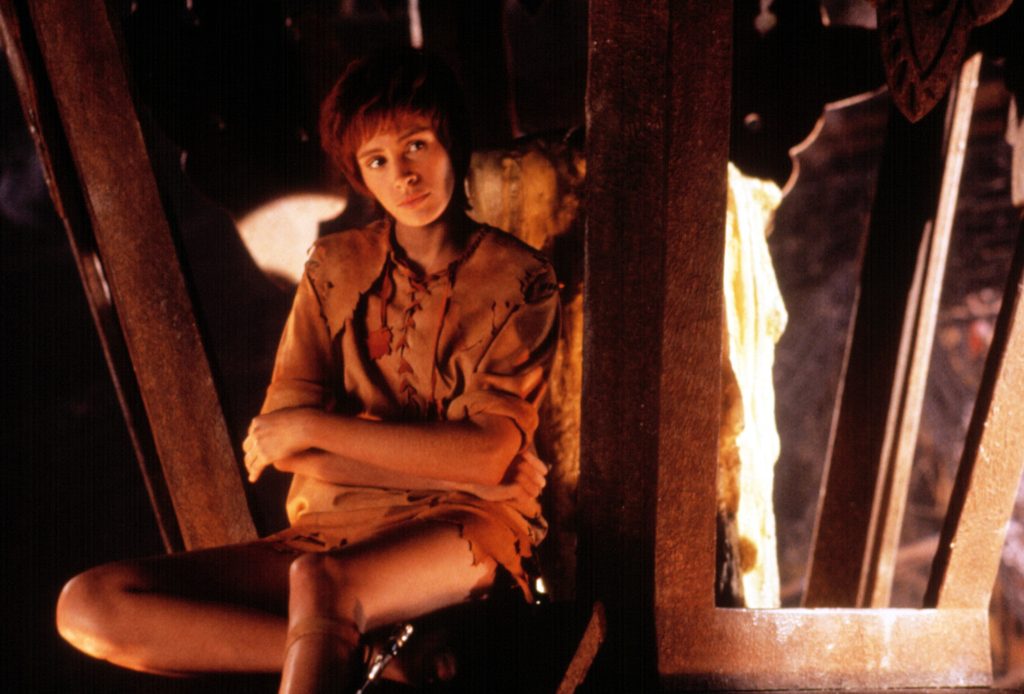
Actually, I take it back: Who I really wrote Tinker Bell for was the young Carrie Fisher. I wanted that acerbic, in-your-face, punky criticism of him. When Steven brought Carrie in to rewrite Tinker Bell, I went, “Yay, she was my muse.” I was somewhat disappointed because her dialogue turned Tink into a cheerleader instead of a drill instructor. Like I said, she was my muse when I wrote Tinker Bell: feisty, wisecracking, in his face. “You’re a fat slob. Where’d you get those love handles?” She wanted to get him in shape. But again, the audience doesn’t care about that. It doesn’t matter what I think or even what Steven thinks. It matters what the audience thinks, and the audience loves this movie.
ED GROSS: You compared Hook to The Wizard of Oz. There’s a history of movies like It’s a Wonderful Life and Willy Wonka & the Chocolate Factory finding a special audience over the decades. Hook seems to be in good company.
JAMES V. HART: That’s what blew me away. It’s more watched than E.T. It became a perennial. Streaming changed that, and now it’s available all the time. But for a while it was like The Wizard of Oz showing at Christmas. And now they’re starting Hook in Concert, with the film and a live orchestra doing John Williams’ incredible score. I’m going to Fort Worth, Texas, December 11, where we world-premiered Hook, not in Hollywood. We world-premiered it in my hometown to raise money for the first AIDS Outreach Center, and it filled up five theaters. The event is going to take place December 11, and I’ll go down and introduce the film. I’m back in the hometown where it all started. I typed “The End” to the script at my parents’ house up the road, where the kids were in the backyard in the pool. It’s nice synchronicity after all these years to come back.
I’m beginning to understand what legacy is, that Hook will be here long after I’m gone, and my kids and their kids are growing up with it as part of their legacy, too. It’s powerful, especially now that Robin’s gone. Bob and I were very close. Our families are still close with the Hoskins family and with Marsha and Robin’s kids. It’s even more emotional now that they’re not here. Arthur Malet, who played Tootles, and Maggie Smith, when she says, “Hello, boy,” I still lose it. Just the way Steven shot that. I’m glad he’s finally warmed up to the wonderful work, the magic he brought to the screen.
ED GROSS: You seem very happy with the film despite what you originally intended and what it ended up being.
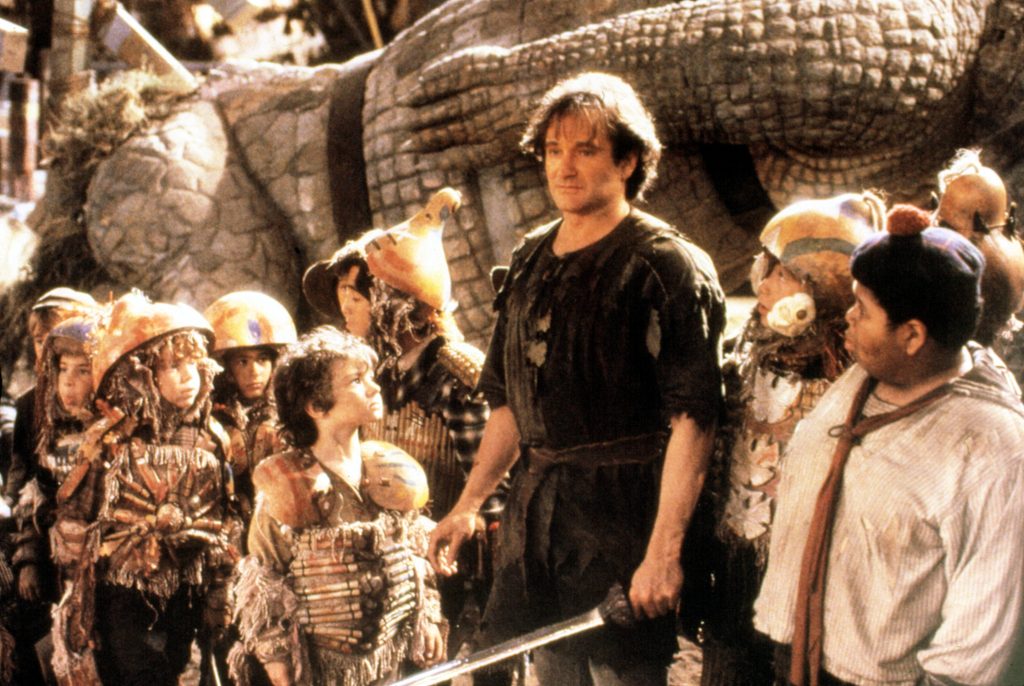
JAMES V. HART: There are things I miss that I wrote that should have been shot. He cut out Rufio’s death. Rufio was not going to die in the movie. And he cut out Tootles. He didn’t understand Tootles. He cut out the mermaids. It was only because he hadn’t lived with the material long enough. His version of Neverland is tomatoes and marbles and mirrors and bubblegum machines. When I wrote the script, unless somebody can die in Neverland, there’s no jeopardy for Peter. When he goes to save his kids, what are the stakes? What’s the cost? What’s the price? It’s not just a kids’ playland. It’s a grown-up adult who goes back to the place he originated from, trying to find himself and save his kids. I went off and worked on Dracula, which was in prep to follow Hook. Stunt performer Keith Campbell, who doubled for Robin Williams, came by my little office one day. He stuck his head in and said, “We’re going to kill Rufio.” I just went, “Yes!”
I don’t know how it happened or why, but I think Steven realized, or somebody got to him, that Rufio needs to die for these reasons. You see the death in the film, but there’s no grieving, no aftermath, because he shot stuff out of sequence. He went back to shoot Rufio’s death in the middle of the big battle scene, and he’d already shot what was around it. You don’t ever see the Lost Boys grieving. There’s the one line Peter says, “You killed Rufio, you stole my kids.” But there’s almost no remembrance of him at all. Dante tells me stories all the time about kids for whom that death scene was a profound moment. They’d never seen that before.
Jon M. Chu, director of Crazy Rich Asians and Wicked, credits Hook and Dante for why he wanted to get into the film business. He’d never seen a Filipino actor in a big Hollywood movie. Rufio’s death had a huge impact on young audiences, who still talk about it. It made Rufio’s character immortal. I created Rufio, he doesn’t exist in Barrie. Steven brought him to life and made a brilliant casting choice in Dante. People get tattoos of Rufio, dress up as him as adults on Halloween. He’s had a huge impact on the audience.
ED GROSS: The film has been so impactful, and it sounds like you’re justifiably proud of it.
JAMES V. HART: Very much so. I’m glad the audience made it so. The industry tried to kill it. They reviewed the budget and everything but the story. [Film critic] Joel Siegel and I became friends, and the review he gave Hook on Good Morning America was interesting. He talked about all the flaws in the movie, but he said, “What’s there is the story.” He went on and on about the story. He got it. A lot of people couldn’t see past the other stuff. They wanted to criticize Steven and the boy who didn’t want to grow up. I’m just glad the audience hung in there. It has a staying power because it came from a very pure place. It came from kids, and the adults didn’t screw it up too badly. We came close.