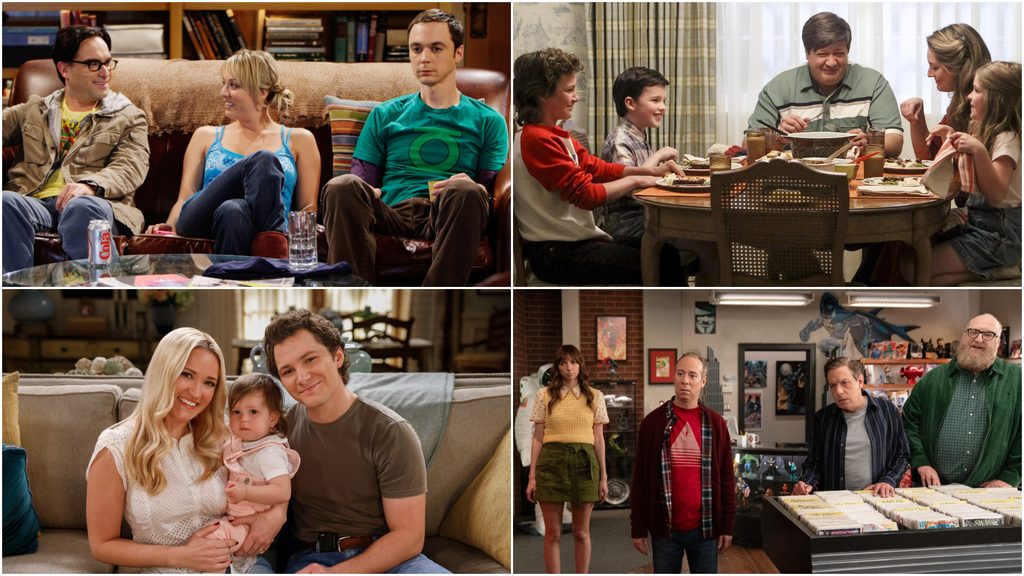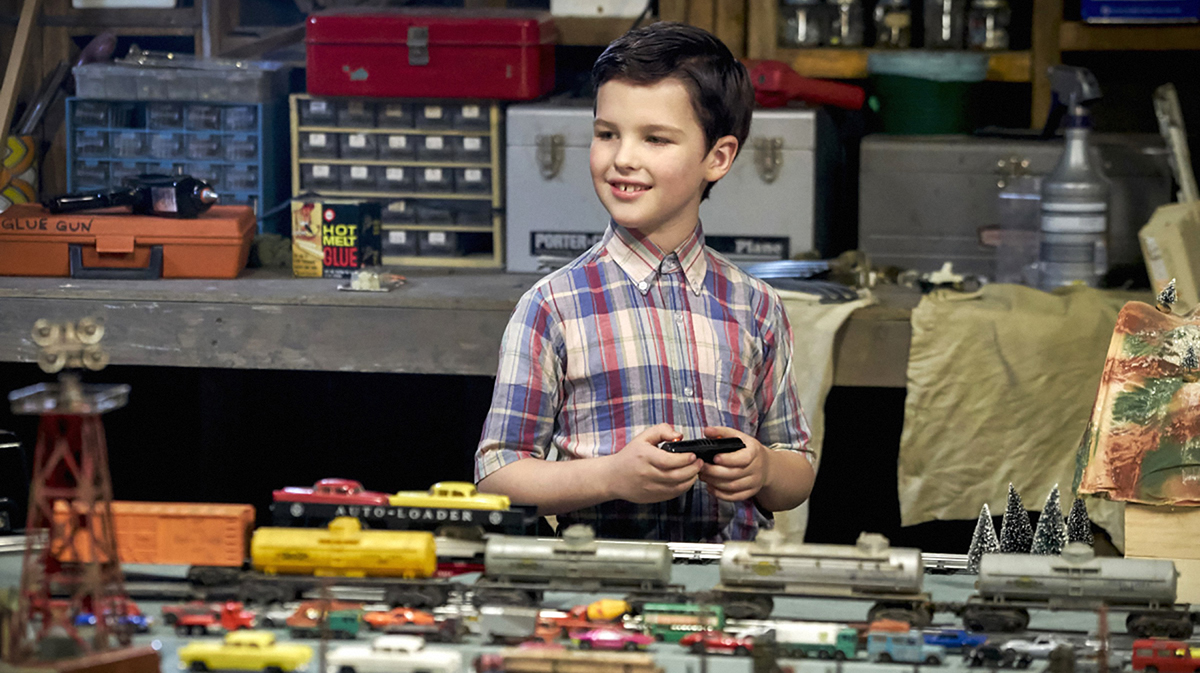
The author of the acclaimed The Big Bang Theory: The Definitive Inside Story of the Epic Hit Series returns to the world of Sheldon Cooper, revealing the surprising stories behind the hit prequel and the people who brought it to life in Young Sheldon: The (Juicier-Than-Meemaw’s-Brisket) Inside Story of the Hit Comedy.
When Jessica Radloff wrote the first book, she offered readers a remarkably intimate look at one of television’s most successful sitcoms. Drawing on extensive interviews with the cast, writers, producers and other creative personnel, she reconstructed the show’s history through the people who actually lived it. Now she’s returned to that universe with the prequel series that took Jim Parsons’ beloved character back to his childhood in Texas, with Iain Armitage stepping into the title role. And while she had already established relationships with many of the people involved, she discovered that the experience of writing this second book would be very different.
“It was easier in the sense that I knew what I was doing this time around and I wasn’t scared out of my mind every step of the way like I was last time,” Radloff explains in an exclusive conversation. “In some other aspects, it was harder because you’re dealing with minors and their parents. I interviewed all the kids’ parents for this one, all their moms. There was also more drama on this show backstage, behind the scenes, than there was on Big Bang. And that took a lot of navigating to figure out, because I wasn’t planning on writing a book this big again. It’s not as thick as the Big Bang one, but it’s close, and it was going to be a much lighter lift originally. But then there were so many people to talk to and everybody had stories, and you realize, wow, a lot of stuff went down.”
The Backstage Drama of Young Sheldon
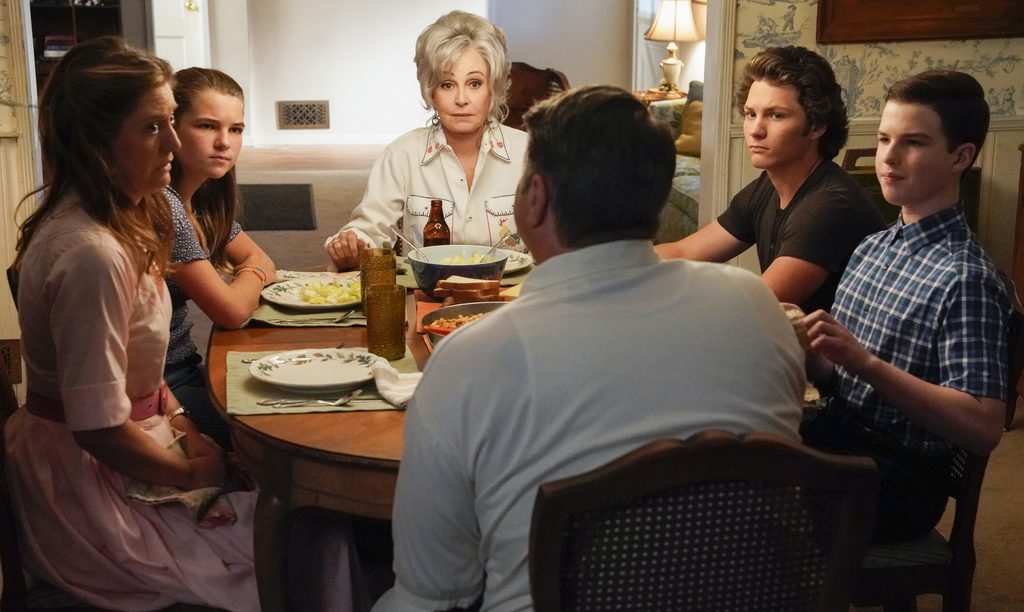
Among the surprises Radloff uncovered was a major shake-up in the writing staff during the show’s earliest days, something viewers would have been unlikely to detect given the finished episodes. “In the first season, most of the writing staff was fired halfway through the first season. They were let go, and Steve Molaro had to figure out how they were going to proceed and with who. And a lot of the Big Bang writers came on board.
“The writers that were there before they were let go were great, fantastic, talented writers. You would never know that there was a change because the scripts were still magnificent for Season 1. I watched it with such a critical eye when I went back to do all my research for it, and I was like, wow, I didn’t appreciate the show as much as I should have when it was on. That shocked me, because usually you can tell when there’s a big shift in the writing staff, and you couldn’t.”
The show’s single-camera production also presented different challenges from the multicamera environment of The Big Bang Theory. Longer filming hours, combined with the responsibility of working with a young cast, occasionally produced difficulties. “Annie Potts calls the kids ‘the ferrets’ because they were all over the place. Sometimes it was cutesy sweet, like, oh, so-and-so is acting up again. And sometimes it was a little bit more serious than that and they had to have talks with them. So it’s hard to navigate those things because you don’t want to sugarcoat it, but you also know nobody’s going to believe you if you write a book and you say, ‘Oh, it was just sunshine and rainbows all the time.'”
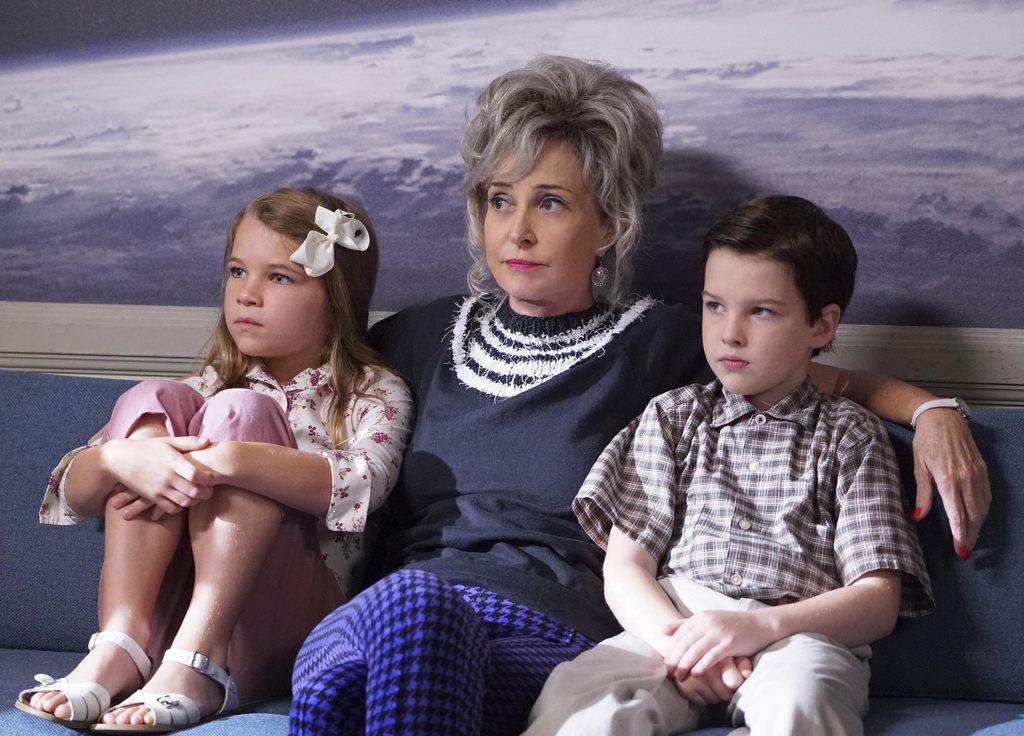
There were also the pressures that affected the television industry as a whole, from COVID and vaccination requirements to the Hollywood strikes. Meanwhile, the young performers were growing older, forcing the writers to reconsider certain storylines and the series’ relationship to the continuity established in The Big Bang Theory. On top of that, then came the decision to end Young Sheldon, followed by plans for Georgie & Mandy’s First Marriage.
“When they did decide to bring the show to a close, a lot of people were upset behind the scenes because they felt that there could have still been more story to tell. Obviously there was more story to tell. There’s a spinoff now, but a lot of the cast, particularly Annie and Raegan, were crushed that they weren’t going to be series regulars in the new spinoff.”
“And then, Montana Jordan and Emily Osment were asked to keep it a secret that there was potentially going to be a spinoff, and they did, but word on a set gets out and that’s really complicated.”
For Radloff, such situations illustrate why an oral history requires interviewing as many participants as possible, particularly when one person’s recollections involve someone else. “The way that I run an oral history is I have to talk to everybody, because if someone talks about someone else, I have to go to that person. It’s emotional. It’s a lot of voices in there that you’re kind of navigating.”
Would Audiences Accept a Different Sheldon Cooper?
There was considerable risk in creating Young Sheldon in the first place. The producers were taking a character identified with Jim Parsons, casting a child actor in the role and shifting from a traditional multicamera sitcom to a single-camera family comedy with a considerably different tone. Radloff says the uncertainty was real, even with the enormous popularity of The Big Bang Theory providing a built-in audience.
“They were really worried about it and they didn’t know. Jim Parsons writes in his foreword that he didn’t realize that there was a chance they may not do a multicam for this. He was very surprised that it was single cam. I think everybody came around to that idea very quickly so that it could differentiate itself from the mothership, but there was a lot of concern. Will the audience follow? Will they be interested in this story? It’s very different in its tone and in its look, and that comes with a lot of trepidation and concerns. But they also felt confident in that they had had such a built-in audience that at least people would be curious to check it out.”
According to the author, one particular scene in the pilot helped convince the filmmakers that they had found the emotional heart of the new series: young Sheldon removing his mitten and taking his father’s hand at the family dinner table. “That’s when they realized we really — I mean, they realized a lot of other moments, too, throughout the pilot — but they really knew then, ‘We’ve got something special here.'”
It was an early indication that Young Sheldon could find its own identity while remaining connected to the character audiences already loved.
Jim Parsons and the Surprising Origins of Young Sheldon
One of the most fascinating revelations concerns the origins of the series itself. Although it’s easy to assume that Young Sheldon began as an effort to capitalize on the popularity of The Big Bang Theory, Radloff explains that its inspiration was considerably more personal.
“This show, Young Sheldon, is very personal to Jim Parsons because even though people assume, well, obviously you have a hit character on Big Bang, you’re just going to create an earlier version, that didn’t happen like that. This came about because Jim’s nephew, nine-year-old Michael Pruski from Houston, Texas, was like Sheldon, very much a prodigy. Jim saw it up close, and it was Jim and his husband Todd’s idea. ‘Let’s see if there’s a show here with my nephew.’ They took it to Chuck [Lorre] out of courtesy to be, like, ‘We just want to run this by you because there are some similarities.’ Chuck was like, ‘Well, wait, we kind of know a character like this already, and it’s the one you play.'”
That connection becomes an important part of Radloff’s book. Michael Pruski participated in an interview about his role in inspiring the series, while other members of Parsons’ family contributed photographs and memories. There was another unexpected development: Chuck Lorre actually wanted Michael to audition for the role.
“Jim reveals that Chuck wanted his nephew, Michael, to audition for the role of a young Sheldon Cooper. At first, it was like, ‘Oh, no way.’ And then he was like, ‘Okay, well, I’m not going to deny him a chance.’ So he did. Michael auditioned for the young Sheldon Cooper role. Obviously, he didn’t get it. That went to Iain.” Radloff adds that Michael has since graduated from New York University and is pursuing acting himself.
Has Jim Parsons Made Peace With Sheldon Cooper?
Parsons’ decision to leave The Big Bang Theory after 12 seasons has been the subject of considerable discussion, particularly when he has spoken candidly about the emotional demands of playing Sheldon Cooper for so many years. But Radloff believes those comments have sometimes been misunderstood.
“Jim is Teflon, meaning he has such a strong exterior because the amount of times he’s been a punching bag about this series, whether it was people thinking it was his fault for Big Bang ending or him saying that he was done playing the character of Sheldon, or in the recent interview that came out earlier this year where he said he was miserable for some of Big Bang‘s run. He’s a very honest person, and unfortunately, so many of his words get twisted by people that don’t understand the full story. If he didn’t love and respect this character, he wouldn’t have written the foreword for me. He wouldn’t have participated in interviews for the books. He also recorded his foreword for the audiobook version.”
For Radloff, the important distinction is that an actor can appreciate a defining role while acknowledging the difficulties that accompanied it. “Two things can be true at the same time. He can love the character, respect the show and still have gone through a really difficult time during its run and wished he had done things differently, or still be glad that he was ready to step away when he did.”
Asked whether she believes Parsons has finally found peace with the character, she offers an encouraging assessment. “I think he is. He did say to me in the book that his being on screen in the finale of Young Sheldon is most likely the last time he will play Sheldon Cooper on camera. I believe him, but I think he’s at peace with it. He doesn’t have any ill will towards anybody or anything. He’s ready to move on, but still celebrate what he was a part of.”
Iain Armitage: Growing Up as Sheldon Cooper
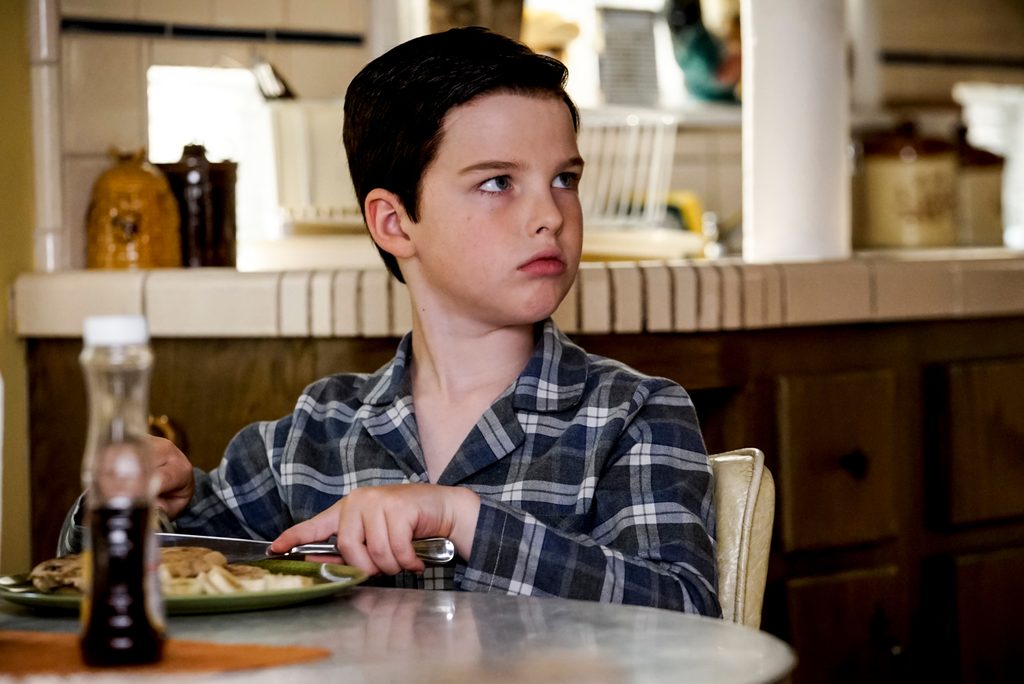
If Parsons spent 12 seasons defining the adult Sheldon, Iain Armitage faced an entirely different challenge: growing up while playing a younger version of a character who was already a television institution. Radloff found Armitage’s personal evolution one of the most compelling aspects of researching the book.
“Ian changed, I think, tremendously over the years, and he’s still evolving. He was very much into Broadway and theater and reporting on theater when he was a little kid before Young Sheldon, before Big Little Lies. He was out there on red carpets interviewing actors in the theater community.”
Armitage’s natural energy and enthusiasm were sometimes at odds with the controlled, intellectually precise character he was playing. “Wallace Shawn says he was very manic and wild in the beginning. You couldn’t get his attention. He was just off running around, and you couldn’t hold his attention much. His brain still moves a million miles a minute.”
Yet Radloff sees some interesting similarities between the actor and his fictional counterpart. “He doesn’t think he’s like Sheldon. I think he’s very much like Sheldon in terms of he’s so knowledgeable about so many things that you feel like an idiot sometimes after talking to him because he’s speaking different languages, he’s saying words that I have to look up in the dictionary. He also talks in the book about how it’s always been hard for him to talk to kids his own age, and it’s easier to talk to adults.”
As the series progressed, Radloff observed considerable growth in the young actor, who developed interests far beyond performing. “I think he’s matured quite a bit. You’ll find in the book a lot of people would describe some annoying behavior from him, and I think he has matured out of a lot of that, but there’s still very much that performer quality in him that is used to always being on because that’s what he’s known for most of his life. He’s very talented in so many areas. I mean, flying planes, still acting, interested in Shakespeare, interested in politics and government, and it’s really incredible.”
Despite the inevitable challenges of working with children, Radloff emphasizes that the production made considerable efforts to create a supportive environment. “When the kids wanted a playground, they built them a playground, and everybody was like their aunts and uncles on that set, but it didn’t mean that they also had free rein. They were there to do a job, and that comes with a lot of responsibility.”
Now that Young Sheldon has ended, Radloff senses that Armitage is especially eager to establish himself beyond the role. “I think for Iain, he really wants to give himself some distance between himself and the role of Sheldon, and he was the only main cast member that didn’t do the audiobook. I think even though of course he’s not playing Sheldon in the audiobook, I think he really wants to create that distance. He wants to do other roles. I think he’s more than anybody else ready to move on from that, even though that’s what he will probably always be known for, and that’s hard.”
The Challenge of Telling Everybody’s Story
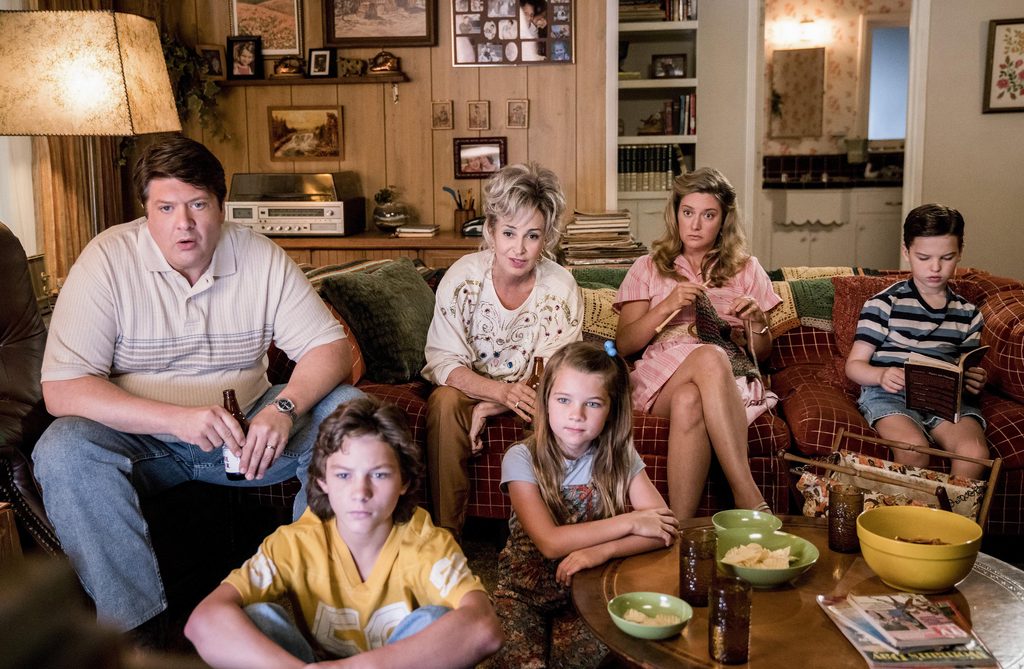
An oral history can only be as comprehensive as the voices it brings together, and Radloff was determined that actors discussed by others in the book would have the opportunity to share their own perspectives. That became particularly challenging when it came to McKenna Grace, who played Paige, and Isabel May, who portrayed Veronica Duncan. Both actresses have gone on to increasingly busy careers.
“It was really hard to get them because of their schedules. What I said to their publicist eventually was, ‘I don’t like having all these people talking about them and then not hearing from them themselves. That’s what’s hard.’ So I was, like, ‘I will wait as long as I can until the last minute if it takes to get them, and 15 minutes, that’s all I need. I’ll make it work.'”
Her persistence paid off. “It ended up, thank goodness, working out, and they were able to even spend longer with me than I thought because they just loved the show that much.”
That determination to gather every possible perspective also helps explain why the book became considerably larger and more emotionally demanding than Radloff initially anticipated.
Is Jessica Radloff Finished With Oral Histories?
With The Big Bang Theory and Young Sheldon now chronicled in considerable detail, the obvious question is whether Radloff might eventually turn her attention to Georgie & Mandy’s First Marriage. For the moment, the answer appears to be no.
“I think I’m done. First of all, you can’t do a proper oral history unless a show has been over for a couple of years. I wouldn’t even want to embark on that, but it takes everything out of you.”
The work demands more than interviewing participants and arranging their recollections into chronological order. It requires navigating relationships, resolving conflicting memories and making difficult editorial decisions about what belongs in the finished book. “I don’t like to say it’s hard because of course it’s hard. Anything worth doing the right way is going to be hard, but it’s got to be something I am so passionate about if I’m going to go down this road again. I know the standard I hold myself to. I am relentless in making sure that I deliver for the reader and the viewer, and it takes a lot out of you. So I’m really grateful that Chuck and the Steves gave me this gift because I don’t know many other people that have had the access like I’ve had.”
She doesn’t rule out writing more books, but another oral history would have to be a subject that inspired the same level of commitment. “I said I was one and done after Big Bang, and then this came along and I couldn’t say no. And now I’m, like, ‘I think I’m two and done.’ It’s just a lot. And I really am lucky that I was so passionate about Young Sheldon. I didn’t even appreciate it as much as I do now after having gone back and rewatched it and interviewed everybody.”
For readers who loved Young Sheldon, that renewed appreciation may be one of the most important things Radloff brings to the book. What began as a prequel to a hugely successful sitcom developed into something with its own identity, its own emotional center and, as her research makes clear, its own complicated history. And thanks to the people who were there, Radloff has given that history a voice.