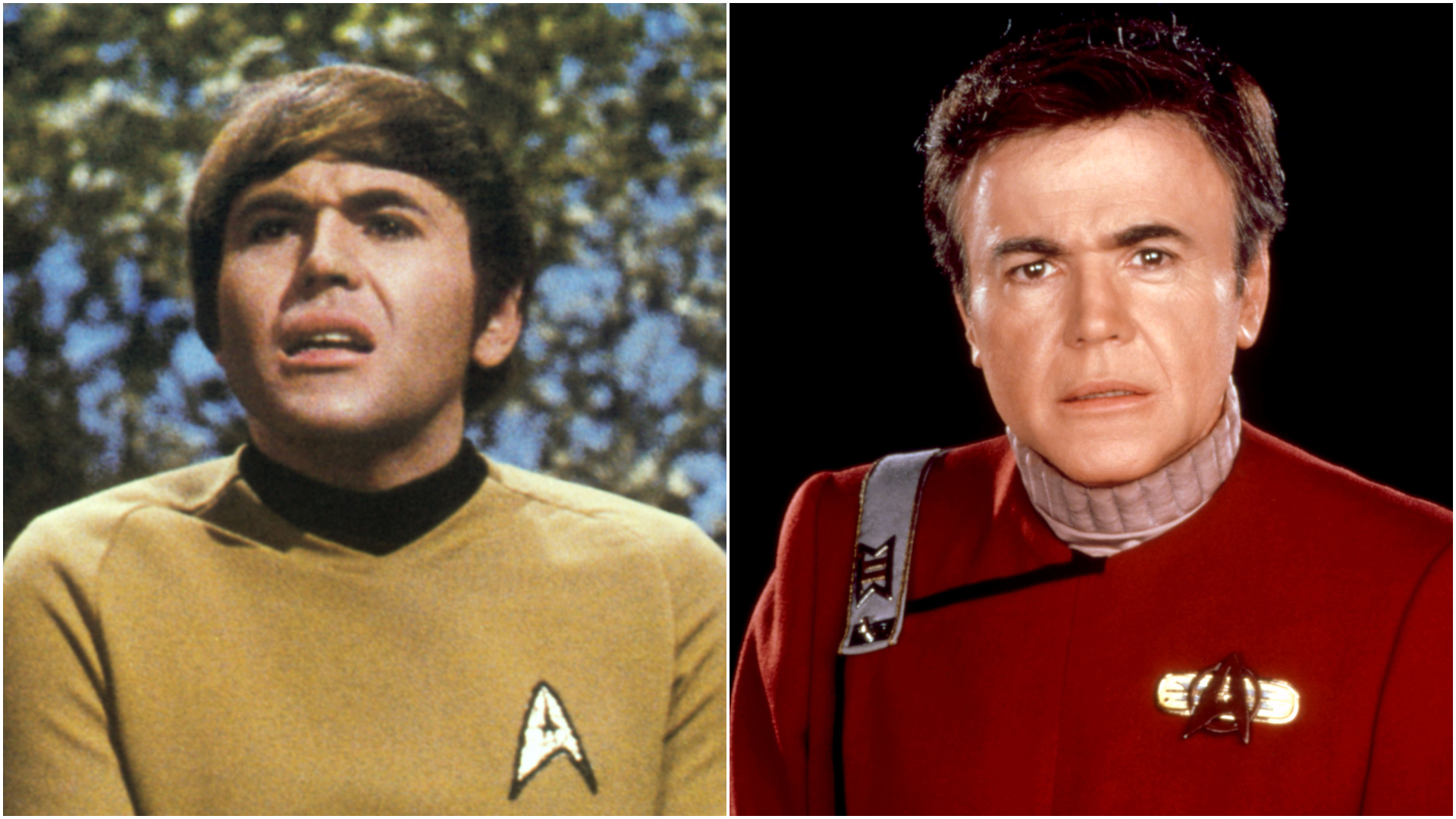
Walter Koenig, who brought the young Russian navigator Pavel Chekov to life on Star Trek and in the original-cast films, has died at the age of 90. Born in Chicago in 1936 and raised in New York, Koenig studied psychology at UCLA before training at the Neighborhood Playhouse. Early television appearances included Combat!, Mr. Novak, The Lieutenant and The Alfred Hitchcock Hour. His previous work with Gene Roddenberry, director Joseph Pevney and casting director Joe D’Agosta would help bring him to Star Trek in its second season.
GENE RODDENBERRY (creator, Star Trek): “The Russians were responsible for the Chekov character. They put in Pravda that ‘Ah, the ugly Americans are at it again. They do a space show, and they forget to include the people who were in space first.’ And I said, ‘My God, they’re right.'”
JOSEPH PEVNEY (director): “When Roddenberry said he wanted to put a Russian on the show, I said, ‘I just used a kid in a television show at Universal named Walter Koenig, who I think I heard do a little Russian. Why don’t we have him in and have him read?’ He looks Russian; his face has a Slavic look to it. He looked right and was not a typical Russian cliché.”
WALTER KOENIG: “They were looking for somebody who would appeal to the bubblegum set. They had somebody in mind like Davy Jones of The Monkees. All that stuff about Pravda—you know, the complaining—that’s all nonsense. That was all just publicity. But it was a very practical decision. They wanted somebody who would appeal to eight-to fourteen-year-olds, and the decision was to make him Russian. My fan mail came from eight-to-fourteen-year-olds who weren’t that aware of the Cold War and what was going on anyway. At the time, the whole thing of getting fan mail was so novel to me that I read every single letter I got. I was literally getting about seven hundred letters a week, so that took up a lot of my spare time.”
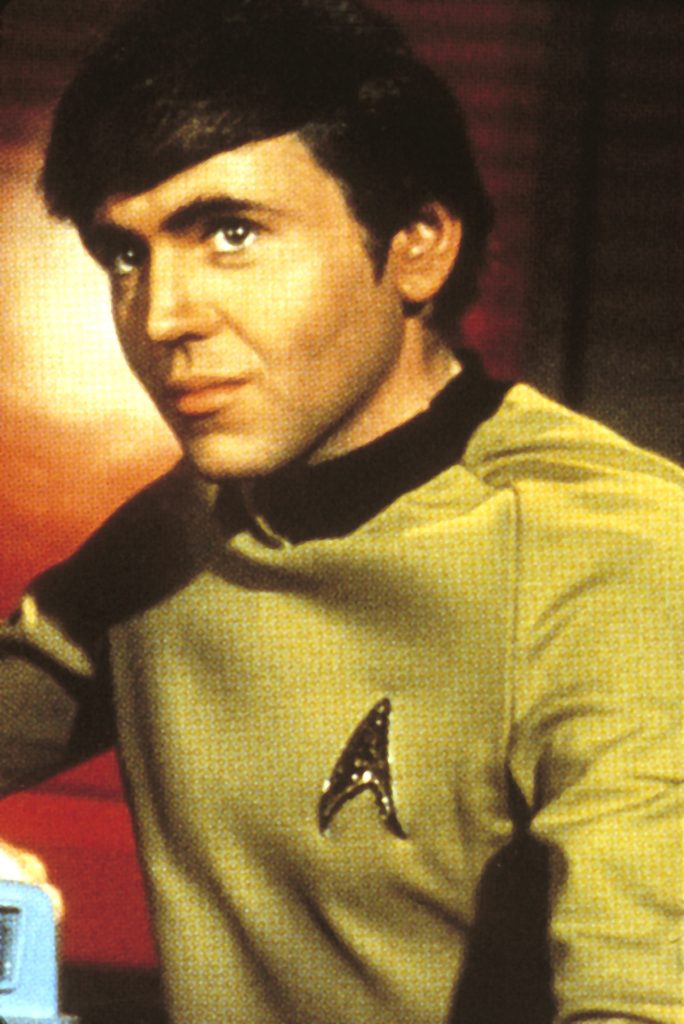
“I had become involved because I had done the part of a Russian on another show [Mr. Novak], and the casting director was the same man. I had also worked with Gene Roddenberry in a leading guest-starring role on The Lieutenant and worked with Joseph Pevney on The Alfred Hitchcock Hour he directed, so my name was already known, and it was a relatively painless situation. There was only one other actor who was brought in to read, and I was told I had the part before I left that day. Joe [D’Agosta] called me in and I read the lines, and his name was Jones, not Chekov, because Davy Jones was who they had in mind for somebody to play this role. I went in and there were all the executives and Gene Roddenberry and Bob Justman, and I read. When I was done, there was dead silence. Either I had knocked them into a stupor or I really fucked up. So they said to me, ‘Yeah, Walt, can you make it funnier?’ Make it funny? How do I make it funny? So my reading was something like, ‘Keptin, guess what, the ship is about to blow up.’”
“They asked me to wait in the outer lobby, and there was one other actor there, an actor I had worked with on a series, and we had played French Resistance fighters together. He went in and read, and he didn’t come out. I waited and waited, and after a while, literally, the sun started to go down and I’m still waiting. What I found out was there was another exit out of Gene’s office which bypasses where I was. So I’m waiting and waiting and waiting, and another fellow comes in and says, ‘Are you Walter Koenig?’ And he drops to his knees, puts his hand between my legs, and I said, ‘What are you doing?’ And then I see a tape measure. He says, ‘I’m measuring you for your pants.’ That’s the ignominious way I found out I had been cast in Star Trek.‘”
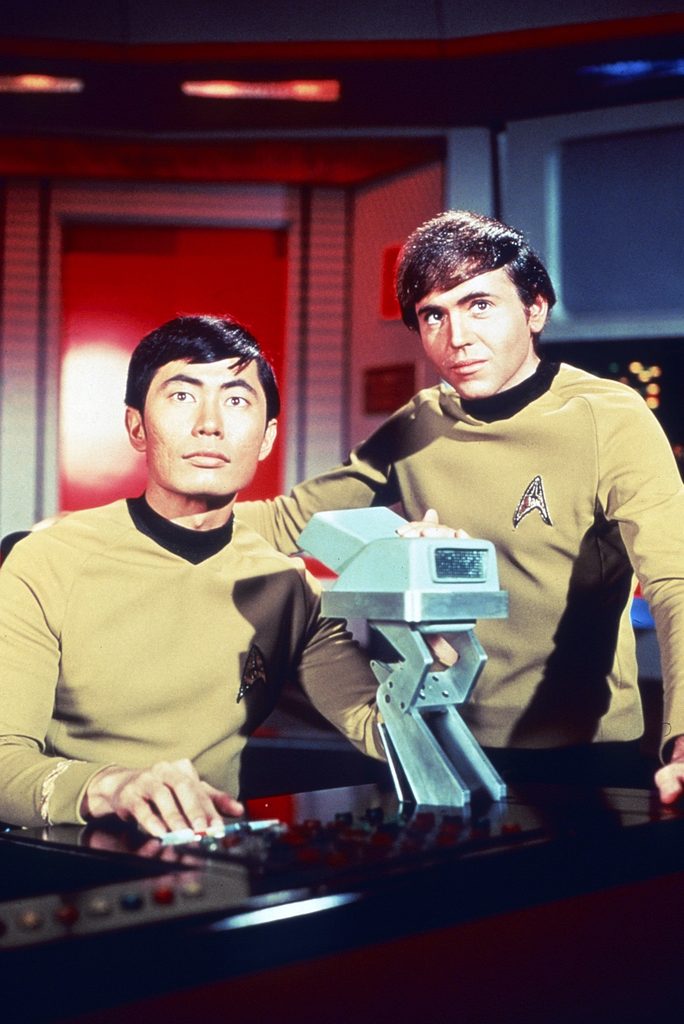
Koenig’s arrival aboard the Enterprise was fortuitous for him, but it complicated matters for another cast member. George Takei was away making The Green Berets, and material intended for Sulu was reassigned to the new navigator.
GEORGE TAKEI (actor, “Sulu”): “I had lobbied in season one and Gene had written some wonderful things for Sulu into the second season’s scripts. But I had taken off for The Green Berets, which went over schedule, and because of the delay, Walter was brought in and he got those lines.”
WALTER KOENIG: “I had no idea how momentous this casting was in my career. I was told that the character might recur, but there was no guarantee. One of the things that happened, fortuitously, was that George Takei was shooting on The Green Berets and was late reporting for the second season, so they brought me back mainly to fill that seat for some sense of continuity, because at that point we had not had an audience reaction. I guess I was lucky that George was unavailable.”
Unbeknownst to Koenig at the time, George Takei, as he admitted in his autobiography, To the Stars, was jealous of the newcomer with whom he now needed to share the spotlight, who was also getting featured in some of the series’ most popular episodes, all originally intended for Sulu.
WALTER KOENIG: “It never came to my attention. I was never aware of his animosity. He was always cordial, and it wasn’t until years later that he said how he felt about me. I should have been more aware that these parts were being lost because of my presence. But on the other hand, he was doing a movie with John Wayne, so I didn’t feel guilty. George is the consummate professional. He was disappointed and treated badly on several occasions and always bore it with enormous dignity and professionalism. And I admire him for that.”
As Chekov became a familiar presence on the bridge, Koenig began thinking about what the character believed and how he might develop. He also found himself increasingly concerned about whether the scripts gave Chekov anything meaningful to do.
WALTER KOENIG: “One day during the second season I asked Gene to have a meeting between seasons when it looked like we were going to be on eight o’clock Mondays and asked him about how my character would evolve based on his popularity. I went to his house, and he proceeded to show me some memos he had written the guys at NBC, and memos from Paramount, and all the memos were very positive, saying, ‘Let’s involve Chekov more, he has appeal. Let’s bring him down to the planets more, involve him with members of the opposite sex.’ And it looked enormously promising.”
“’Spectre of the Gun’ was the first episode written with that in mind for third season, and it reflected what my anticipation was going to be. Immediately thereafter, our time slot was changed and everybody sort of threw up their hands and gave up on the show. They brought in Freiberger, who had no particular style, as far as I could tell, or empathy for the character. I don’t think he had any antipathy either, but he didn’t see it as being important.”
FRED FREIBERGER (producer, Star Trek season three): They wouldn’t be actors if they didn’t want more. You’re doing an ensemble show and what’s selling the show, hopefully, is the personality of the stars, the relationship between the three most important ones, Shatner, Nimoy, and Kelley. You would try to give all the others something. I gave Scotty a love affair in one show. It’s very difficult, because when you have many format characters, to try and keep them going in a limited time is hard. I certainly sympathize with any of them who wanted more to do.
In one of the third year’s most infamous installments, the Enterprise comes across a band of space hippies searching for a mythical Eden. Originally pitched by D. C. Fontana as “Joanna,” about McCoy’s estranged daughter arriving aboard the Enterprise, Fontana took her name off the episode, which shared few similarities with her original pitch.
One has to wonder, though, if it was Freiberger who rejected the idea or Roddenberry, who had actually dismissed the pitch as early as 1967. In a memo to John Meredyth Lucas, Roddenberry had written, “While Dorothy has come up with an interesting character in McCoy’s long-lost daughter . . . there is really not sufficient story in the premise. I recommend we give this one a pass while leaving the way open to Dorothy to submit a new story using this character and situation.” The script would eventually be written for Chekov and a former girlfriend and would be retitled “The Way to Eden.”
WALTER KOENIG: “I read ‘The Way to Eden’ and I thought it was all wrong. First of all, it wasn’t even my character. Chekov became very uptight and very establishment, saying, ‘No, no, no’ and ‘Don’t do this.’ I don’t think that was the way he would have responded. What happened was ‘The Way to Eden’ was really written for McCoy’s daughter rather than Chekov’s former girlfriend. As a matter of fact, prior to that I had submitted a four-page statement of how I felt Chekov could be improved and made more multidimensional without subverting the story. Freiberger’s comment was, ‘I read it, forget it.’ I knew the character was always going to be subordinate, but instead of spending the time pushing buttons, we could have spent that same thirty seconds on Chekov in a more fruitful way. Even though he said, ‘I read it, forget it,’ the episode was his way of giving me something and making Chekov a featured player. But I knew it just wasn’t any good when I read it, and then the casting was terrible. They were all good actors, like Victor Brandt, but they were totally miscast. They’re supposed to be playing thirty-year-old flower children, hippie types, and they looked much rougher and much tougher than that.”
DAVID GERROLD (writer, “The Trouble With Tribbles”): “There’s a way to say no to an actor other than ‘Read your memo. Forget it.’ You know, ‘I read your memo, thank you for taking the time to let us know so much about what you want to do. It’s not quite going to fit into our plans, but I’m certainly going to keep your comments on the top of my mind when we talk about Chekov.’ The actor goes out saying, ‘Well, he said no, but he let me down gently,’ and he feels good toward the producer.
Koenig’s objections to the third season extended beyond Chekov’s characterization. One casting decision, in particular, struck him as unfair to professional actors.
WALTER KOENIG: “To me, the most heinous violation Freiberger perpetuated was casting Melvin Belli in ‘And the Children Shall Lead.’ That infuriated me, because Melvin was a friend of Freiberger’s evidently, and it’s one thing to cast friends who are actors and another to cast friends who are not actors. He was a lawyer! Not only did it dilute the impact, whatever there was to begin with, but it took an acting job away from an actor. I was really upset after that. It was very unfair.”
The Animated Series: The Enterprise Without Chekov
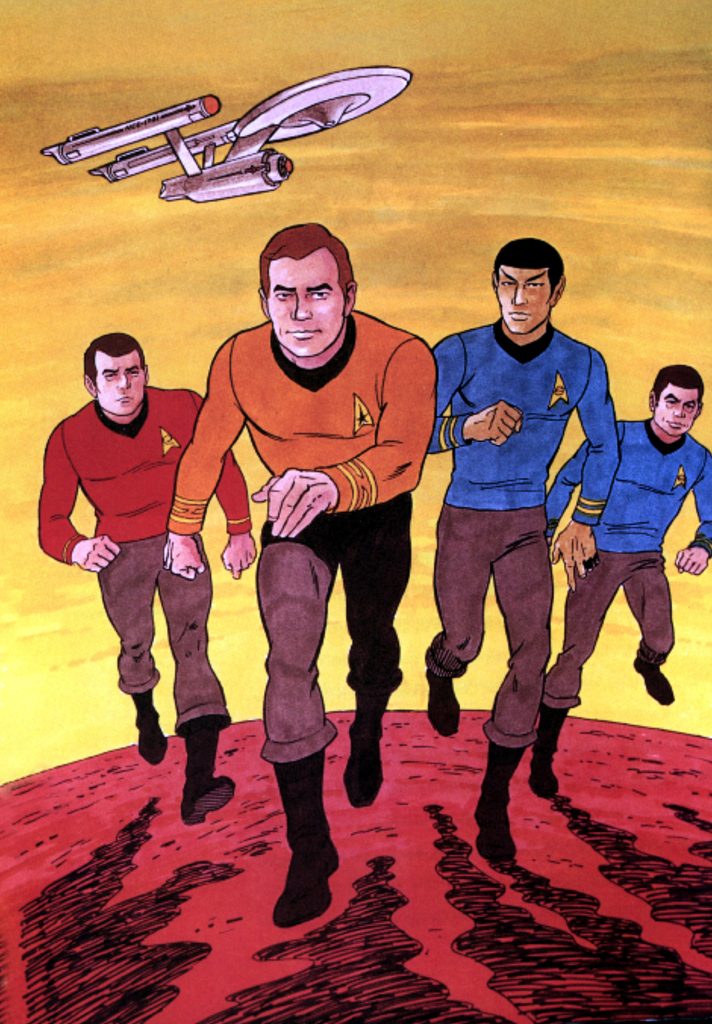
When Star Trek was canceled in 1969, Walter Koenig found himself in an unusual position. Pavel Chekov had made him recognizable to millions of television viewers, but that recognition didn’t necessarily translate into new acting opportunities. Like many performers who become closely associated with a particular character, Koenig discovered that Hollywood could have difficulty seeing him as anyone else.
He continued working, appearing in such productions as The Virginian, the 1971 television movie Goodbye, Raggedy Ann, and the 1973 feature Nightmare Honeymoon. That same year, he played the alien Oro in two episodes of the Canadian science-fiction series The Starlost. Meanwhile, Star Trek was finding a growing audience in syndication, and the conventions that would become such an important part of Koenig’s life were beginning to flourish.
By 1973, the franchise was ready to return to television in animated form. For him, however, the revival brought an unexpected disappointment: nearly all of his former castmates were being reunited aboard the Enterprise, but Chekov wasn’t among them.
WALTER KOENIG: “I was upset with the way I found out that I wasn’t a part of the show—at a convention. Everybody thought someone else had told me apparently. Dorothy thought Gene had, Gene thought Dorothy had. To save money, Filmation wanted Majel to do Uhura’s voice also and Jimmy to do Sulu’s voice since in cartoons at the time you got paid one check to do two characters’ voices. To Leonard’s credit, he said he would not do the series unless they hired George and Nichelle since they had been there from the beginning.”
“This [‘The Ultimate Vulcan’] was the one script I wrote for the show, and it was incredibly frustrating. Gene decided early on this is animation so we can do anything we want, so let’s have talking plants. And I put in the talking plants and did ten drafts of the script and, at that time, I didn’t know what writers were going through on Star Trek. I stuck with it and we finally got it done. They did, in fact, offer me another script and I said no; I passed. I couldn’t go along with all the arbitrary decisions that didn’t make the script any better, not that it was extraordinary to begin with. So to an extent it was an interesting learning experience, but it was painful. I was also still upset about not being part of the series.”
The Road Back to Star Trek
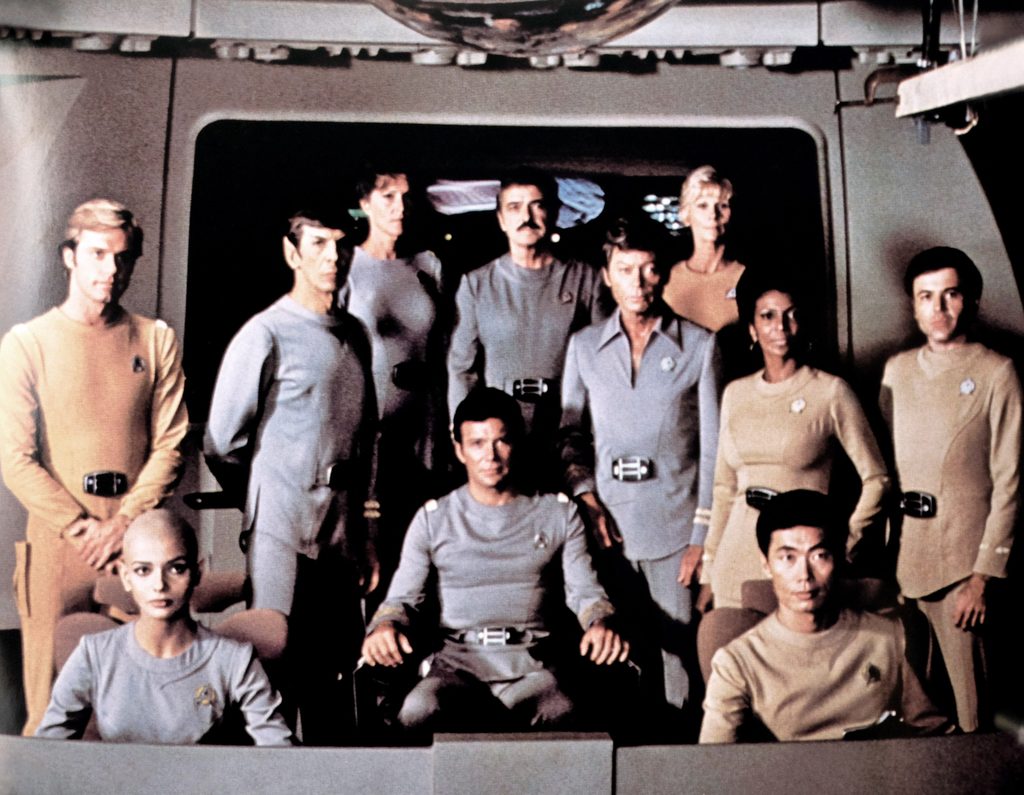
The prospect of bringing Star Trek back in live action should have been welcome news for the original cast. For Koenig, though, the first proposed movie revived an unsettling question: would there be a place for Chekov at all?
WALTER KOENIG: “In a conversation with George, Jimmy or Nichelle they mentioned having received a letter from Gene saying, ‘Welcome aboard, we’re going to go forward and do this new movie.’ I didn’t receive a letter. I called up [Roddenberry’s assistant] Susan Sackett, who said I was worrying unnecessarily and that even though Gene was out of town, she would speak to him by phone and he would reassure me. Well, he didn’t call me until he got back to town, and he told me that this idea he had was going to take place three years before the five-year mission and since six years had transpired since the series and my character to begin with was already nine years younger than I was, they thought that I was too old to play myself. Then he said something that they would try to use me as Chekov’s father, which would have been a kick. But, again, it was kind of a painful situation realizing that there were no concrete plans for using Chekov in that movie.”
Abandoning the prequel idea, Roddenberry began work on a treatment for what would eventually be called The God Thing, in which Admiral Kirk would reassemble the crew to stop an entity on course for Earth that claims to be God. The ship turns out to be a living computer programmed by a race that was “cast out” of its own dimension and into ours. The story ends with the “God” entity miraculously granting our crew newfound youth and returning them back to the original five-year mission.
‘Star Trek: The Motion Picture’
The road from proposed films to the planned Star Trek: Phase II television series was anything but straightforward. Eventually, the project became the 1979 feature Star Trek: The Motion Picture, reuniting Koenig with the Enterprise crew but presenting new challenges during production.
WALTER KOENIG: “I’m already gun-shy because of the animated series, and I was more than a bit skeptical and concerned that I would not be involved with so many aborted starts from movie to a new series. Then incredibly, the series thing [Phase II] happened. I went in for a costume fitting of the old costume and came home and about an hour later they said the whole project was put on hold. Personally, I thought they were terrific. A real improvement over the pjs we wore on the series—except that they were uncomfortable. I was impressed. One button was worth more than an entire costume in the old days.”
“I was rather in awe of [director] Robert Wise. We started the picture with only two-thirds of a finished screenplay, though. You cannot back yourself into a corner like that. The whole idea behind screenwriting is rewriting and we didn’t have the luxury of rewriting because we were writing with the camera and reshooting was enormously expensive. So we started out with a story about an antagonistic, omnipotent being that was this great threat, and somewhere in the middle of the story we decided it’s not really that at all. It’s this awe-inspiring entity that’s trying to achieve another level of consciousness. What happens to the conflict? We didn’t have a tension-filled conflict, we had people with wide eyes marveling at the enormity and strangeness of this thing. It’s great for a travelogue, but it’s not great for good storytelling and it failed in that regard.”
“We didn’t have a finished screenplay and know exactly where we were going with it. And then halfway through the picture the clause on Bill and Leonard’s contracts kicked in that they had dialogue or story approval if the picture went beyond so many weeks. So those meetings in the morning between Gene Roddenberry, Livingston and Jon Povill and Jeffrey Katzenberg and Bill and Leonard and Bob Wise were seven people deciding what they were going to shoot that day, and many with vested interests that it would be shot a certain way.”
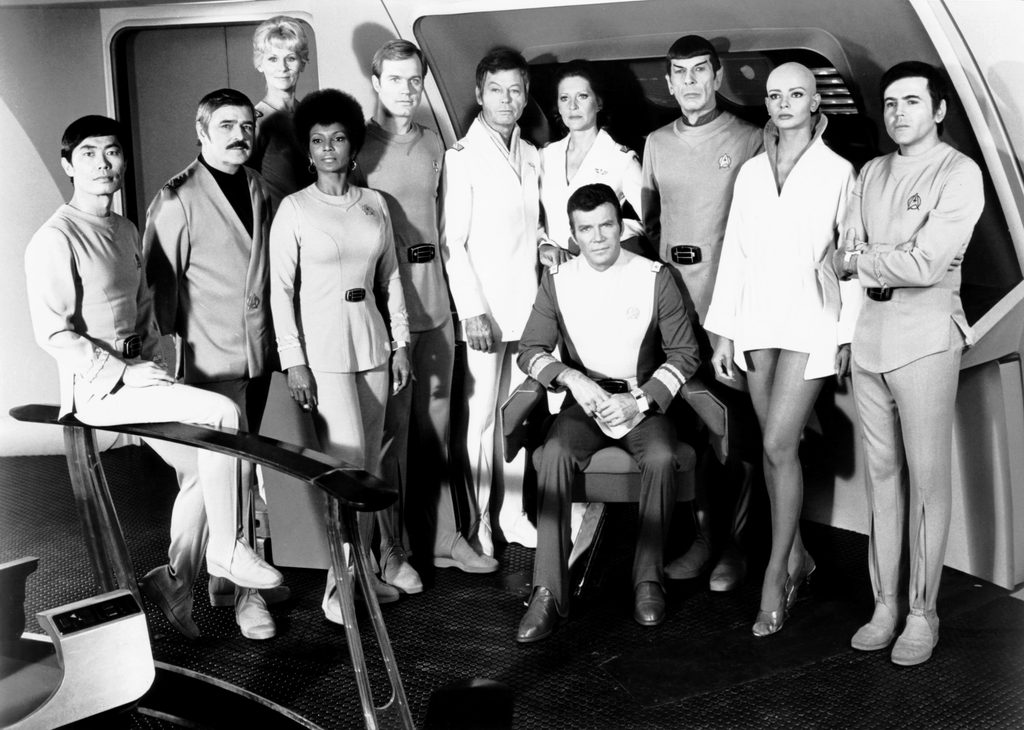
“A highlight for me was the first day, when I was at my console and Nichelle was at hers and George was at his, and Bill, the captain, walked onto the bridge for the first time, and I said, ‘Keptin.’ We all jumped up and ran over to him. I got such a high, such a rush at that moment that it took all my self-control not to embrace him. It was such a lovely moment. I should have embraced him. That moment was when we were setting up the lighting for that shot I finally believed we were making this movie. I was just caught up in a wonderful sense of euphoria, it’s one of the highlight moments of my involvement with Star Trek. The sense of yes, we are doing this, how neat, how unusual . . . how extraordinary.”
The emotional high of returning to the Enterprise was followed by Koenig’s growing concern about the finished picture. He remembered sensing trouble even before he sat down to watch it.
WALTER KOENIG: “Gene had just seen the cut and it was literally still wet. We were flying to Washington, DC, and I asked, ‘What do you think of the picture?’ He answered, ‘It’s a good picture.’ It was a death knell. As soon as he said that, I knew it wasn’t going to work. He didn’t put it down, he didn’t denigrate it, but I heard it in his voice. I absolutely knew. Then you hope against hope that it’s going to be good, and you see the limousines and the red carpets and the spotlights. Then you see those first five minutes with the music and you see V’ger and the destruction it causes. I got very excited, but shortly thereafter I began to become aware of time, that time was passing. That I wasn’t involved in the picture. I was sitting in the audience and my heart sank.”
“What Star Trek I had was a true science-fiction story. It was innovative storytelling as far as it went. This was not simply a story that we pulled from a horse opera and made into a science-fiction movie. It was indigenous to the genre . . . and it should have been since it was borrowed from other Star Trek stories. There are myriad reasons for the lack of success, including setting a release date for the picture in advance. According to Gene, he fought that, because it really did back him into a corner and made the picture that much more expensive. They had to go on double time, golden time, and at one point they were shooting around the clock in postproduction. So I guess it was a cursed project from the start.”
“I don’t trust my own feelings sometimes. Everybody seems to think that that extra footage helped the film, and when I saw it I didn’t really see that. Maybe because I don’t have the objectivity. In the reediting they added a scene of mine after I get burned and Ilia heals my burns, but when you have just a few scenes to begin with, it seems like I had more involvement than it might otherwise.”
‘Star Trek II: The Wrath of Khan’
After the mixed experience of the first movie, Koenig had reason to temper his expectations about a sequel. Star Trek II: The Wrath of Khan surprised him by placing Chekov near the center of the action—and by offering a very different working experience.
WALTER KOENIG: “I never wanted to be teased by the prospects of another film. I remember reading the script and thinking this can’t be true, this is so nice for my character. It came out of the blue for me. I had no reason to believe that they were going to elaborate on what I had done in the past. I kept holding my breath when I was reading it and thereafter, wondering whether or not it was all going to come apart somehow.”
The sequel also made Koenig an informal guardian of the show’s continuity. That led to an awkward—and ultimately amusing—choice about Khan’s apparent recognition of Chekov.
WALTER KOENIG: “[Executive producer] Harve Bennett had given me a copy of the script and asked me to do a Trekkie run [for accuracy to series canon] based on some comments I had made on an earlier draft where they had Spock dying in the first act, and I said this was absolutely unconscionable; this is the climax of your story. He’s not one of these guys in the red shirts. I guess he was reasonably impressed with that, because he then asked me to do a Trekkie run and there was some dialogue about Khan saying, ‘Mr. Chekov, I remember the face’—which he couldn’t possibly have since I wasn’t on the series when Ricardo Montalban did that episode. I was faced with the ethical dilemma of mentioning it to Bennett or letting it go. I chose survival as opposed to ethics and I didn’t mention it and, in fact, Ricardo didn’t even know it. He didn’t know that he hadn’t met me before.”
Chekov’s scenes with Khan and the crew of the Reliant also brought Koenig into close contact with Montalban and Paul Winfield. He remembered that collaboration as one of the happiest aspects of the production.
WALTER KOENIG: “Working with him was a pure delight. He was always there for your close-up. I remember Nick saying something to him about his performance needing fine-tuning, and I thought, ‘Oh shit, here it comes.’ Instead he says, ‘Ah, you’re right.’ It was beautiful. That’s the way every theatrical experience should be and with us, unfortunately, it wasn’t. Wrath of Khan was a delight from start to finish and one of the greatest delights was working with Ricardo Montalban and Paul Winfield [who played Terrell, captain of the starship Reliant], and not being on the Enterprise having to be judged by our leading man, not having scenes reblocked by our leading man, which I found very oppressive. I’m working with actors who give as well as take. Totally professional.”
“If you can point to one single element that makes this film successful, it is the presence of a formidable, worthy antagonist. You can’t have conflict unless you have something to butt up against. V’ger was more like something you were in awe of. Ricardo Montalban, on the other hand, did a wonderful job with the character of Khan. Not only is he a presence in terms of villainy, but he’s also a character of depth. Even when you hate him, you feel a certain sympathy toward him. That, to me, is extraordinary. Nick Meyer was quoted as saying that he wanted to direct Montalban in King Lear and I can believe it.”
‘Star Trek III: The Search for Spock’
The success of The Wrath of Khan led to another film, this time directed by Leonard Nimoy. Koenig was initially unsure how his longtime colleague would approach the supporting actors, but he found that Nimoy had his own restrained style of directing.
WALTER KOENIG: “Initially, I was apprehensive with Star Trek III. I didn’t know what to expect, Leonard’s not the most effusive guy. He is by nature a little bit on the distant side and he never established a real rapport with us. Perhaps with Bill, but not with the supporting actors. He was always present and a delight, but I didn’t know whether he would try and interpret our roles, and that’s a concern I always have when an actor is directing. He didn’t do any of that, he primarily directed by omission. He only spoke about your performance if he didn’t think it was going well. If you did it well, he’d just say ‘Cut, print.’ That was it. He said very little to me either through the course of III or IV, because I guess he thought I was okay. I saw him get angry once because somebody had done something that was kind of a caricature and he said, ‘Don’t do that./ That was the only time I ever saw him express any emotion.”
Koenig’s assessment of the film extended beyond Nimoy’s direction. He also had complicated feelings about producer Harve Bennett’s relationship with the original cast.
WALTER KOENIG: “Harve wanted to remold the show in his own image. He’s obviously a bright man and has a good sense of which stories work. I don’t think he liked working in Roddenberry’s shadow. He resented him. Harve had a tendency to talk about us to other people. George [Takei] came back and would recount what Harve had said about me. And he [Bennett] spoke to me about other actors on the show.”
The film reunited Koenig with another actor from much earlier in his life: Christopher Lloyd, who played the Klingon commander Kruge. Koenig discovered that a childhood friendship did not necessarily resume where it had left off.
WALTER KOENIG: “I went to school with Chris Lloyd. We used to be best buddies, it could have been a trip. It wasn’t. He was very much into his character, which was good, but he was not very approachable as a consequence, and the rapport we had had as kids in a playhouse was not there for me. I always want to go home again and I guess you can’t.”
“I felt it was too similar to Star Trek II in terms of the major conflict. The bad guys wanted the bomb and we are trying to keep them away from it. It lacked a soul and a real emotional center, and it was not as good a story as Star Trek II. The one thing that was the saving grace of the picture was the destruction of the Enterprise.”
Even a costume choice could expose how little authority Koenig felt he had over Chekov’s portrayal. One outfit in The Search for Spock became an unexpectedly revealing example.
WALTER KOENIG: “That little pink suit [I was wearing] was interesting because I thought it was kind of ridiculous looking. [Costume designer] Robert Fletcher patterned it after some Russian artist who dressed that way. We had shot some footage with it and Michael Eisner looked at the dailies and said he didn’t like it and Leonard came up to me and said, ‘We’re going to take you out of the costume.’ I said, ‘Thank God,’ and he said, ‘Why didn’t you say something?’ I was a little bit irritated, thinking, ‘Why the hell didn’t I say anything?’ It was because I was so into this mindset that I was just the hired help and had no input. It never occurred to me that I might say, ‘I don’t like this’ and that’s probably my fault.”
‘Star Trek IV: The Voyage Home’
Nimoy returned to direct Star Trek IV: The Voyage Home, which took the crew into 20th century San Francisco. For Koenig, the screenplay was especially gratifying: at last, he felt Chekov was being given dialogue that could belong to no one else.
WALTER KOENIG: “After III, I was looking forward to working with Leonard Nimoy on IV and that turned out to be a very nice experience as well. I loved the script. I read it in Harve Bennett’s office and I chuckled and I said this is wonderful, and it was the only time that I really felt confident that I knew what I was talking about. I didn’t see how it could miss. What great fun. It seemed to have everything for mass entertainment approval. For the first time, I felt my dialogue was indigenous to character and only Chekov could say those lines; they were written for him. We had a big crossover audience which accounts for the $109 million domestic that we did. It had wonderful comedy moments, and the scene between Bill and Leonard and Catherine Hicks in the truck is classic. It’s spontaneously done even though it may have been shot four or five times—the anachronisms of being 300 years out of time just worked beautifully as far as I was concerned.”
Koenig’s enthusiasm for The Voyage Home was rooted in more than its commercial appeal. He felt its humor emerged naturally from the predicament of the characters—a standard against which he judged the next film.
WALTER KOENIG: “I think when comedy comes out of story it can be enormously affecting and successful. When it’s a sidebar or artificially transplanted onto your story, then it’s not as successful. What happened with Star Trek V is that we had comedy that either had nothing to do with the story—like the campfire scenes—or it somehow diffused the dramatic moments, like the climax of the story when Kirk is saying ‘What does God need with a starship?’ In Star Trek IV, it was the perfect marriage.”
‘Star Trek V: The Final Frontier’
The next film put William Shatner in the director’s chair and shifted the tone once again. Koenig had reservations about the screenplay and worried about how Shatner might handle the other characters, although his actual experience on the set proved more agreeable than he expected.
WALTER KOENIG: “I read the script in Harve’s office and I was trying to be diplomatic, because we had already had problems in terms of discussing story, and I told him, ‘Don’t you think coming back and doing the campfire scene at the end is sort of gilding the lily?’ He said, ‘Yes, I do, but he wants to shoot it that way and in the editing, we’ll pull it way back.’ That didn’t happen, but that’s what he said to me.”
“I didn’t initially feel the project was doomed. Bill’s a bright man. He understands the camera very well. I don’t think he has as good a story sense as he does of camera and how to direct. I never said I felt the picture failed because of his direction. It failed because of the story concept. I don’t think it was well thought out. We had the same problem we had on Star Trek: The Motion Picture. We had an antagonist who changes, who goes through a metamorphosis, and suddenly the guy that we’ve been booing and hissing is one of us and we introduce a whole other character to be an antagonist at the end of the story without building to this and without ever having a sense of learning to fear and to hate the evil entity.”
Beyond his reservations about the story, Koenig remained troubled by the limited influence of the supporting actors. A plot point involving Sybok’s powers illustrated the imbalance.
WALTER KOENIG: “What it speaks to is that the supporting cast doesn’t have the influence with the executives in the front office that the big three do. Originally, Leonard and DeForest’s characters fell sway [to Sybok’s mind control] and Kirk was the only one that didn’t and they objected rightly, but the rest of us weren’t in a position to object. In my case, the onus was pretty much off of me because you didn’t see me convert and the consequences of the conversion. I abhorred the idea because it was really a religious conversion the way it was originally written, which was particularly objectionable. The holier-than-thou sort of stuff was almost a Moonies kind of thing.”
“No matter what my differences are with Bill, each time he has said he would do one of these films, no matter how outrageous the discrepancies in salaries are, I breathe a sigh of relief and say thank you, because I know the pictures wouldn’t be made unless he was there and he knows they wouldn’t be made, and that’s why he’s so difficult sometimes.”
“My main concern was [whether] Bill was going to manipulate us and to reinterpret our characters. In fact, he was quoted in Starlog as saying he’s had things he wanted to change in our characters for years and this is our opportunity. A more pretentious comment I couldn’t believe, and I was very upset about that, and I was angry, and I told George and Nichelle and Jimmy if at any point he picks on any of us, I’m walking off the set. I will not stand for that, he cannot do that to us. I had heard stories about him from T.J. Hooker when he directed, and even when he didn’t direct, how he had caused grief for other people, and that’s what I was anticipating. I had underestimated Bill again . . . he was so cordial and so generous with his approbation that it became almost a gag.”
“I would say, ‘Yessir, Captain,’ and he would say, ‘Walt, wonderful, wonderful!’ He was very affirming and very supportive. I knew the part would be small, he’s talked about how the big three is what carried the TV series and that he wanted to do an episode of the series on a bigger level. So I knew the part was going to be very small, but as it is I still had more to do on Star Trek V than I did on Star Trek VI. I only worked eight days on the picture, so I didn’t have any time to develop an animosity, and the way he dealt with us was very pleasant.”
‘Star Trek VI: The Undiscovered Country’
As the original cast approached what was expected to be its final feature, Koenig hoped the story would acknowledge how much the crew had been through together. He had even developed his own proposal for a sixth film, but the eventual production left him with some of his strongest frustrations about Chekov’s treatment.
WALTER KOENIG: “I was supposed to come in and pitch Frank Mancuso my idea for Star Trek VI. I ended up submitting it on paper. I had three of the characters dying in the story. I thought we were all done. Certainly after Star Trek I, I thought we were done.
“[Shatner, Nimoy and Kelley] deferred part of their salaries. That’s not the same as taking points. This was guaranteed, I hasten to add. The sixth movie was: ‘Let’s cash in on the 25th anniversary; maybe there’s still some tread left on the tire.’ But it’s true the studios were backing down from big-budget films. Paramount had just gotten burned with Godfather III.”
Whatever the commercial reasoning behind a sixth movie, Koenig hoped it would provide a meaningful farewell. Instead, he felt the supporting cast had once again been treated as interchangeable voices delivering exposition.
WALTER KOENIG: I was absolutely fucking miserable from day one on Star Trek VI. It was so disappointing to me . . . and I didn’t even have Harve Bennett to blame anymore. Ralph Winter is a charming, delightful, and considerate man, and I had considered Nick a booster of mine because he had written the best stuff in Star Trek IV as well as directing Star Trek II, but I found this script to be so totally devoid of any individuality for the supporting characters.
“It was as if you could literally have taken one long speech and taken a scissor to it, cut it into pieces, and handed it to us. For me, it was not a wrap-up at all. I thought, at last some recognition, some attention had to be paid to the supporting characters, and given their moment. There were no first-person personal pronouns; none of us ever said ‘I.’ It was always ‘Keptain, there is a ship out there,’ not ‘Keptain, I see a ship out there and I’m worried about this.’ We were there as expository vehicles, and that alone, and that was really painful. My sense of ego and identity just cried out for some opportunity to express character, and it was just not available.”
“I had written pages of notes before we started shooting and gave them to [producer] Ralph Winter, who thought they were all very germane. It was not to subvert the story, but to make the words the character had onscreen at that time significant. Ralph told me he gave them all to Nick, who never acknowledged them, so every time we did a scene, I was angry. I became angry at the other actors. I didn’t blow up or scream and carry on, but I was in a state of constant agitation. I wanted this to be what the other actors apparently felt that it was, which was a wrap-up in a way that made it feel that we had grown as characters and the audience had an opportunity to really experience who we were.”
“Ultimately, what I decided is there is a huge irony about Star Trek. It was always a show about the future, and the supporting characters were hopelessly immersed in the past. We never grew, we were the same characters we were on the television series, and we never had a chance to develop, to go into the future with the stories and the Enterprise. We were forever stuck back in the sixties in terms of the lack of dimension of the characters and the studio perspective on who we were as actors and characters.”
‘Star Trek: Generations’ — Still on the Sidelines
Chekov did return to the screen in Star Trek: Generations, which opened with a handoff between the original cast and the Next Generation era. But the older crew’s participation was limited, and Koenig’s comments suggest that the experience revived familiar concerns about how much room the supporting characters were given. He ultimately appeared in the opening sequence alongside William Shatner and James Doohan. Although the setting was recognizable, he did not feel that the original cast had a substantial place in the new film.
WALTER KOENIG: “The bridge we worked on was similar to ours, so it did feel like Star Trek. On the other hand, like Bill says, I felt like a guest on the show. I didn’t feel like we were really part of it. As secondary as I felt on our own series, this one felt really strange, because I knew that this was, at most, a preamble for a story before they really got on their way with The Next Gen.”
For Walter Koenig, Star Trek was a source of both extraordinary opportunity and considerable frustration. He never hesitated to speak candidly about the disappointments, the creative disagreements or his belief that Chekov deserved more than the scripts often allowed him. Yet beneath those frustrations was an actor who cared deeply about his craft, his character and the extraordinary phenomenon he had helped create.
What began as a role intended to attract younger viewers became a defining part of his life and an enduring piece of television history. Koenig helped give the Enterprise something essential to Gene Roddenberry’s vision: a future in which a young Russian could stand alongside Americans, Scots, Japanese and Vulcans, united by something greater than the differences between them. And while Koenig may have wished that Chekov had been given more opportunities to grow, his place in that future—and in the hearts of generations of Star Trek fans—was never in doubt.