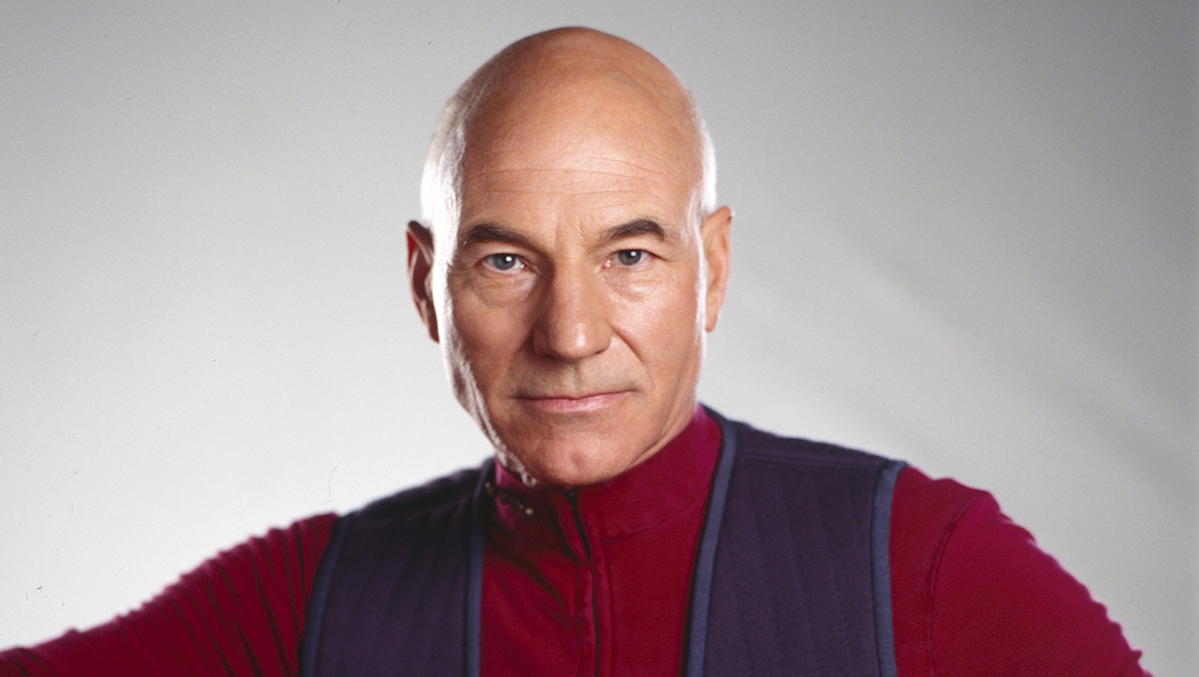
Today, the idea of anyone other than Patrick Stewart portraying Captain Jean-Luc Picard seems almost unthinkable. Yet when Star Trek: The Next Generation was being assembled in 1987, Stewart was far from the obvious choice, and the search for the actor who would command the new Enterprise took some interesting turns, all of which we’re looking back at in tribute to the late actor.
It may seem strange in retrospect, but there was reason for the producers to be concerned about getting it right. The original Star Trek had succeeded not simply because of Gene Roddenberry’s vision of the future, but because of the actors who brought that vision to life. William Shatner, Leonard Nimoy and DeForest Kelley had established a chemistry that was nearly impossible to duplicate, and the challenge facing the new series was to find performers who could create something equally memorable without becoming pale imitations of their predecessors.
To help accomplish that, veteran casting director Junie Lowry-Johnson was brought in, beginning a process that would ultimately bring together one of television’s most beloved science fiction ensembles. But the road to that final cast was hardly a straight one, particularly when it came to finding the right Jean-Luc Picard.
Two actors who received serious consideration were Mitchell Ryan and Roy Thinnes. Ryan, a familiar face from decades of film and television work, would eventually make his way aboard the Enterprise in the second-season episode “The Icarus Factor,” playing Kyle Riker, the estranged father of Jonathan Frakes’ William Riker. Thinnes, meanwhile, was already well known to science fiction audiences for his starring role as David Vincent in the 1960s series The Invaders. For a time, both were regarded as leading candidates.
Perhaps the most intriguing name in the running, however, was Yaphet Kotto, an actor the studio was particularly interested in casting. Kotto had already demonstrated his considerable range, playing the ruthless Kananga in the James Bond film Live and Let Die and Parker, one of the blue-collar crew members fighting for survival in Ridley Scott’s Alien. He possessed the kind of authority and commanding presence that could easily have translated into the captain of a Federation starship.
Had Kotto, Ryan or Thinnes been cast, there’s no telling how The Next Generation might have developed or how audiences would have responded. What we do know is that Patrick Stewart ultimately won the role and proceeded to make Picard entirely his own. Rather than attempting to recreate William Shatner’s James Kirk, he gave audiences a captain who led as much through intellect, diplomacy and conviction as through action. In doing so, Stewart helped establish that Star Trek could move beyond its original characters and still retain the qualities that had made it so enduring in the first place.
RICK BERMAN (Executive Producer, Star Trek: The Next Generation): “The fans of the original series already had a somewhat jaundiced eye when it came to this new series, because they felt, how can you put a new captain at the seat of the Enterprise? Bill Shatner, that’s Captain Kirk. And when they heard it was going to be a 40-year-old bald Englishman, they kind of went nuts.”
ROBERT H. JUSTMAN (Supervising Producer, Star Trek: The Next Generation): “My wife and I were attending a UCLA extension course on humor and one night there were going to be two actors who were going to read from Shakespearean comedies and Noel Coward. There were a woman and a man and the man was Patrick Stewart. My wife and I were sitting there and Patrick looked familiar, but I hadn’t placed him as Serjanus from I, Claudius or from Tinker, Tailor, Soldier, Spy and shows like that. Patrick sat down, pushed up his jacket sleeves to display his massive forearms, and commenced to read. He spoke a few sentences and I was thunderstruck.
“I turned to my wife, Jackie, and I said, ‘I think I found our new captain!’ I’d been back at Paramount preparing the show for a month or two at the most, but I was so impressed with what I saw and heard that night, the next day I called SAG and found out who Patrick’s agent was here in town, because he was over from London just for this, and got hold of the agent and made arrangements for Patrick to visit with Gene and me at Gene’s house the following Monday. Patrick came in his rental car, and we sat around for 30-40 minutes, and then he made his goodbyes and left to fly back to England. After he drove away, Gene closed the door and turned to me and I will quote him exactly. He said, ‘I won’t have him.’”
RICK BERMAN: “I met Patrick Stewart and said to Bob Justman, ‘We have to convince Gene to use this guy’ and Bob said to me, ‘We can’t. When Gene makes up his mind, it’s a waste of time to try and change it.’ But in my case, ignorance was bliss. I didn’t believe that.”
ROBERT H. JUSTMAN: “No matter what I said, he was adamant, and the reason was because the character he had created in his own mind was a very hairy Frenchman, so we embarked upon a campaign that lasted for some months, and when Rick Berman came on the show and became supervising producer with me, Rick jumped all over it, too, and said, ‘He’s perfect!’”
RICK BERMAN: “I was the guy who basically bugged Gene into realizing that Patrick was the best Picard.”
GENE RODDENBERRY (Creator and Executive Producer, Star Trek: The Next Generation): “Bob Justman, who has been with me since day one, suggested Picard’s identity. He had gone to UCLA and had seen this man he wanted as Picard. He presented him to me, and my first reaction was, ‘I don’t want a bald man.’ In his wisdom, Justman kept his mouth shut and let me grow accustomed to him.”
RICK BERMAN: “He finally agreed, though he said, ‘But when we bring him to the studio for the final audition, I want him to wear a wig, because I don’t want this guy going in bald.’ So, Patrick made a phone call to London and got a very, very good wig made by one of the best theatrical wig makers in England. And he had the wig sent over. Patrick came in and somebody was there to help him put on the wig. We brought him to read for John Pike at the studio. It was Patrick and Stephen Macht. A very good actor, but not in Patrick’s league for this role. They both read and at the end Pike said, ‘Go with the English guy, but lose the wig.’ And that was the best three words we could have heard. He knew that Patrick was bald and he had seen all the photographs of him and we had played him a tape of Patrick’s clips. That was the greatest sales point for The Next Generation.”
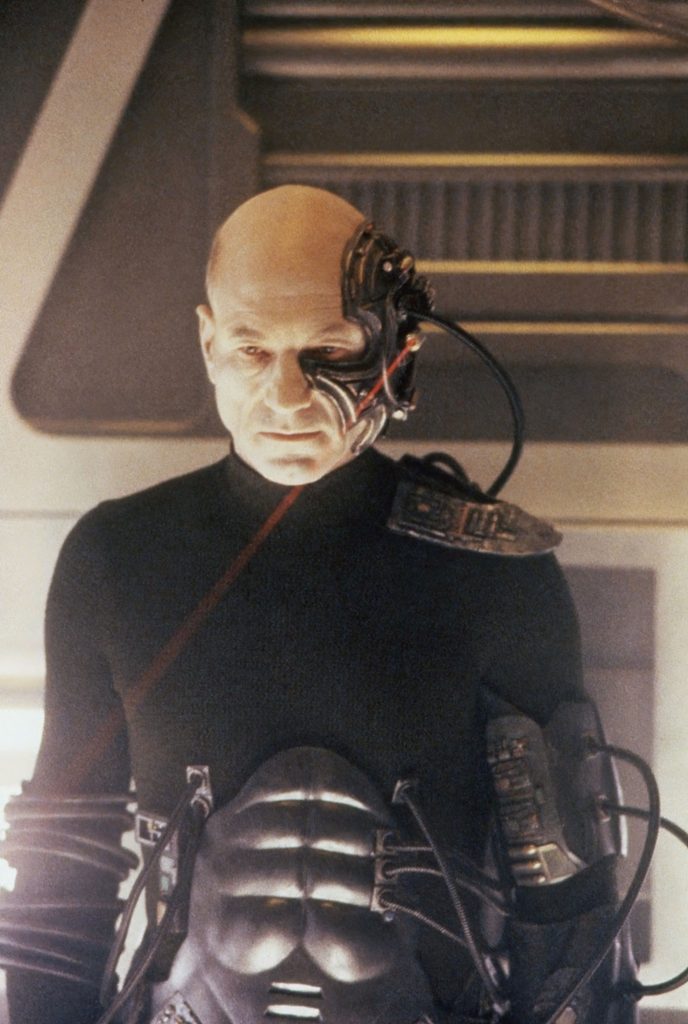
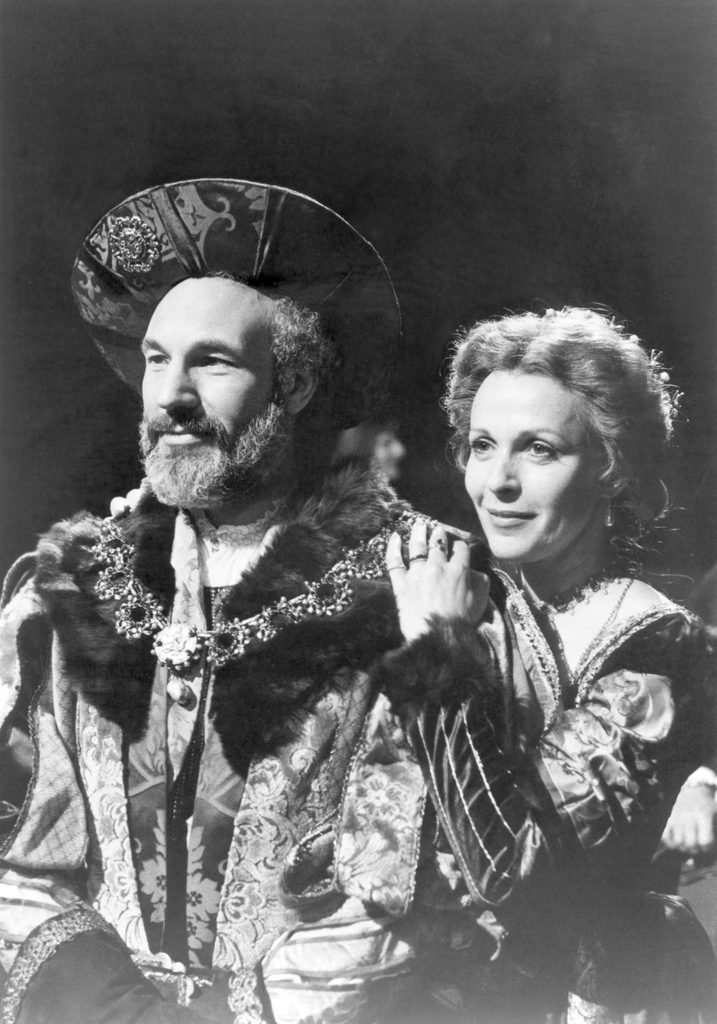
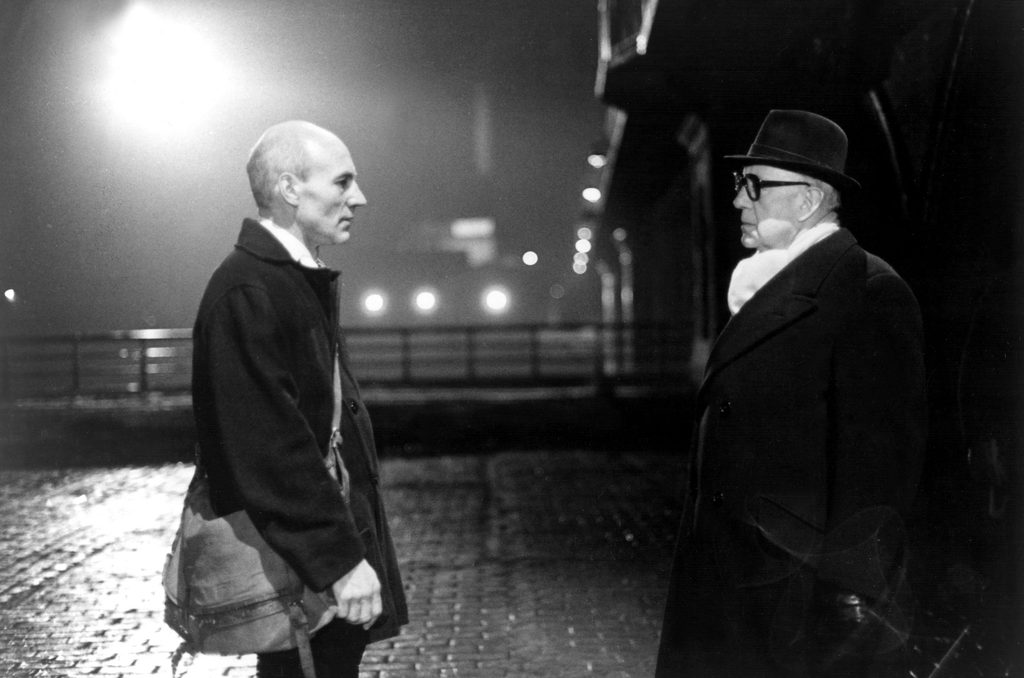
Prior to assuming the captaincy of the starship Enterprise, Patrick Stewart appeared in a number of well-regarded BBC productions, including I, Claudius and Smiley’s People. On stage, he won the prestigious London Fringe Award for Best Actor for his performance in Who’s Afraid of Virginia Woolf? and an Olivier Award for his performance in Shakespeare’s Antony and Cleopatra.
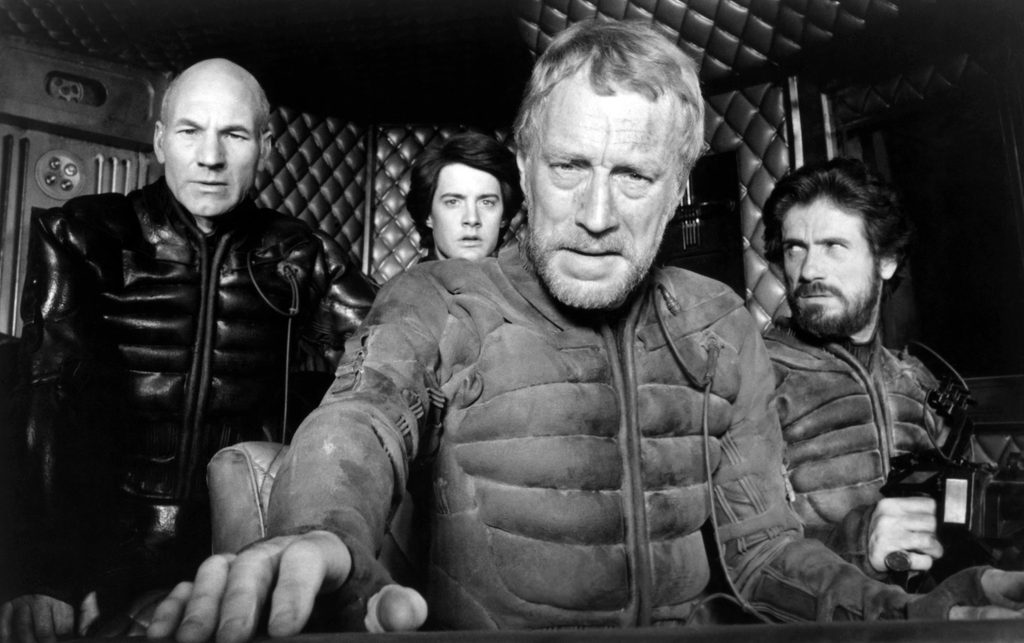
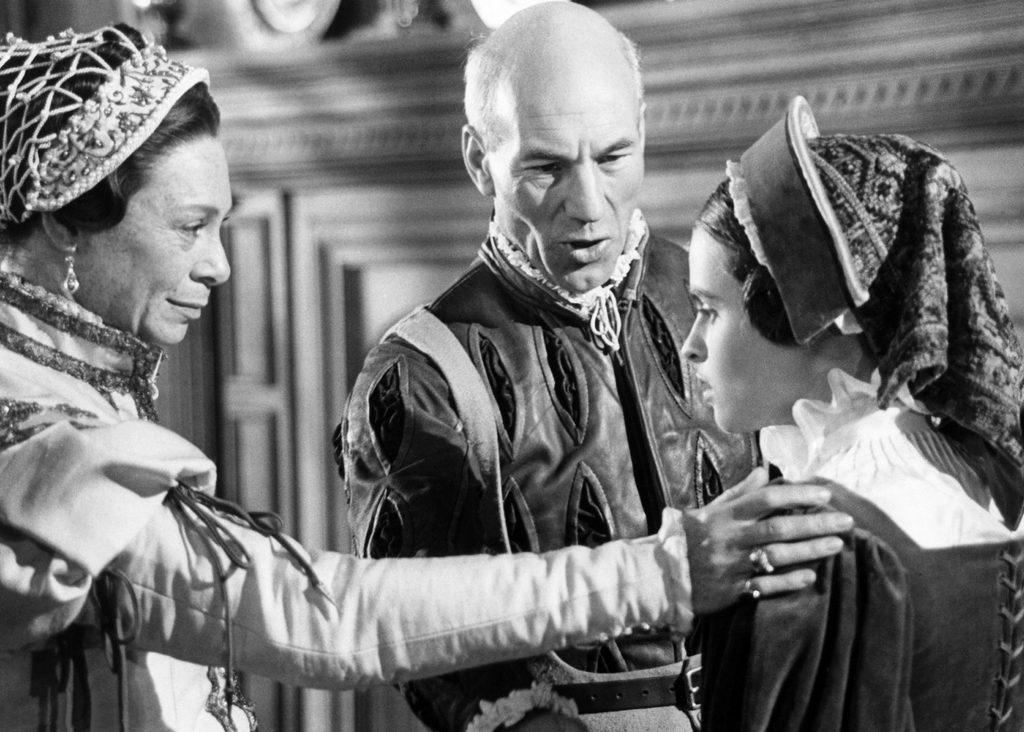
The actor, who played a Frenchman on the show, grew up in the small English town of Mirfield and for 25 years was an Associate Artist of the Royal Shakespeare Company. His film credits included David Lynch’s Dune, Tobe Hooper’s Lifeforce, John Boorman’s Excalibur and the role of the Duke of Suffolk in Lady Jane. After assuming the role of Captain Picard, Stewart appeared in Steve Martin’s L.A. Story and later helped define another franchise playing Professor Charles Xavier in the X-Men movies, while continuing to star in a one-man version of A Christmas Carol.
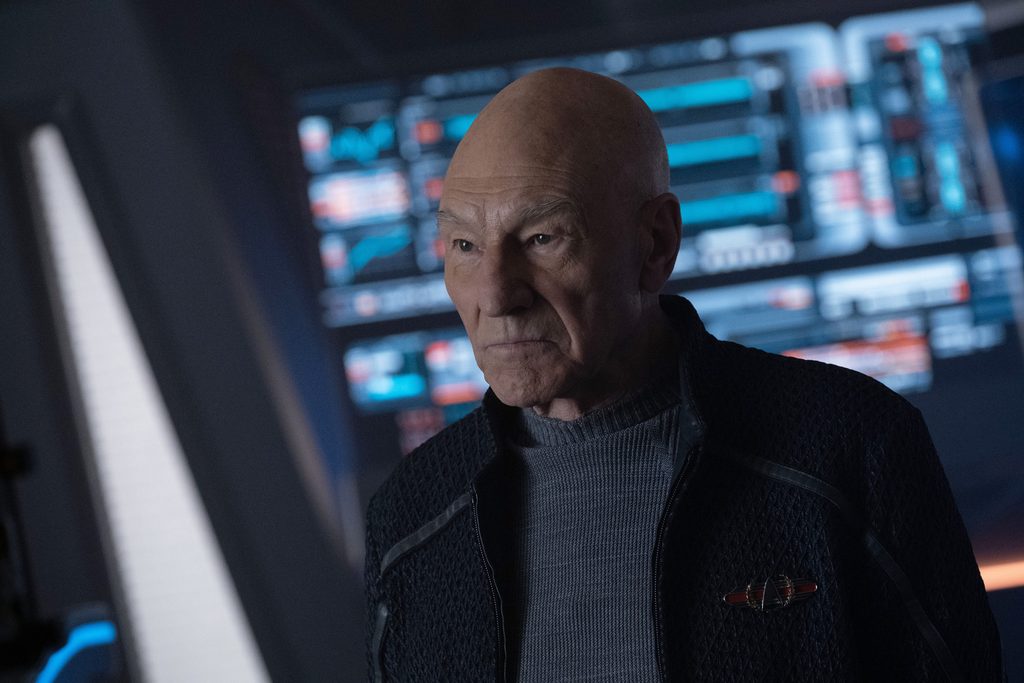
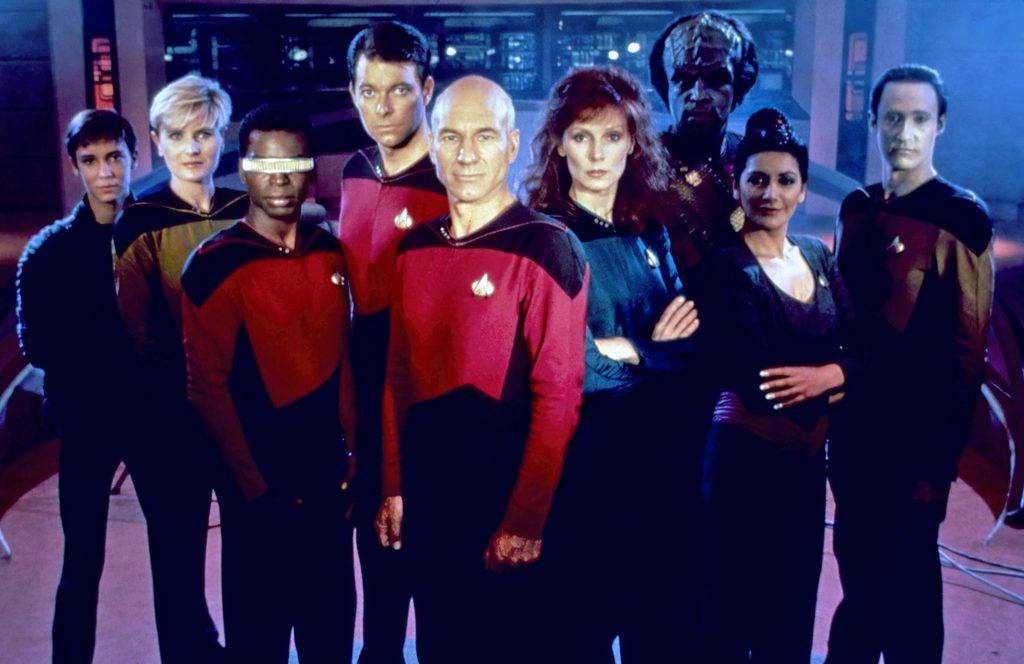
PATRICK STEWART (Actor, Captain Jean-Luc Picard): “As a friend of mine put it when I accepted the job, how do you think it will feel playing an American icon? It did make me a little uneasy, so I’m happy that people accepted the captain as a non-American. The other thing that has pleased me is that people said, ‘You are the crew of the Enterprise and we believe in that crew.’ They refer to the vivid contrast between the previous captain and myself, not in a competitive way, but in that they are so different there isn’t any sense of overlap.”
BRANNON BRAGA (Co-Producer, Star Trek: The Next Generation): “So much of the success of Next Generation was Patrick Stewart, quite frankly. We always used to say the guy could read a phone book and we’d watch him. He just was so good. I always said a Star Trek series is only as good as its captain and Picard was pretty f’n great.”
PATRICK STEWART: “I am truly interested as a human being and as an actor with the use of power. How it is acquired. How it works. I’ve always been quite a political person and I’ve always been fascinated with the use of power in politics. It was always important to me to try and establish and affirm the quiet, but absolute authority he has on the ship and that seemed to be successful. It’s been my lot for years to play a whole list of national leaders, dictators, kings, princes and party bosses, and I’ve never found that tiresome. If you play a king, you get to sit down a lot when the other people are standing. In The Next Generation, I tended to be on my feet all the time.”